Enzyme for Oat Milk Sugar Conversion
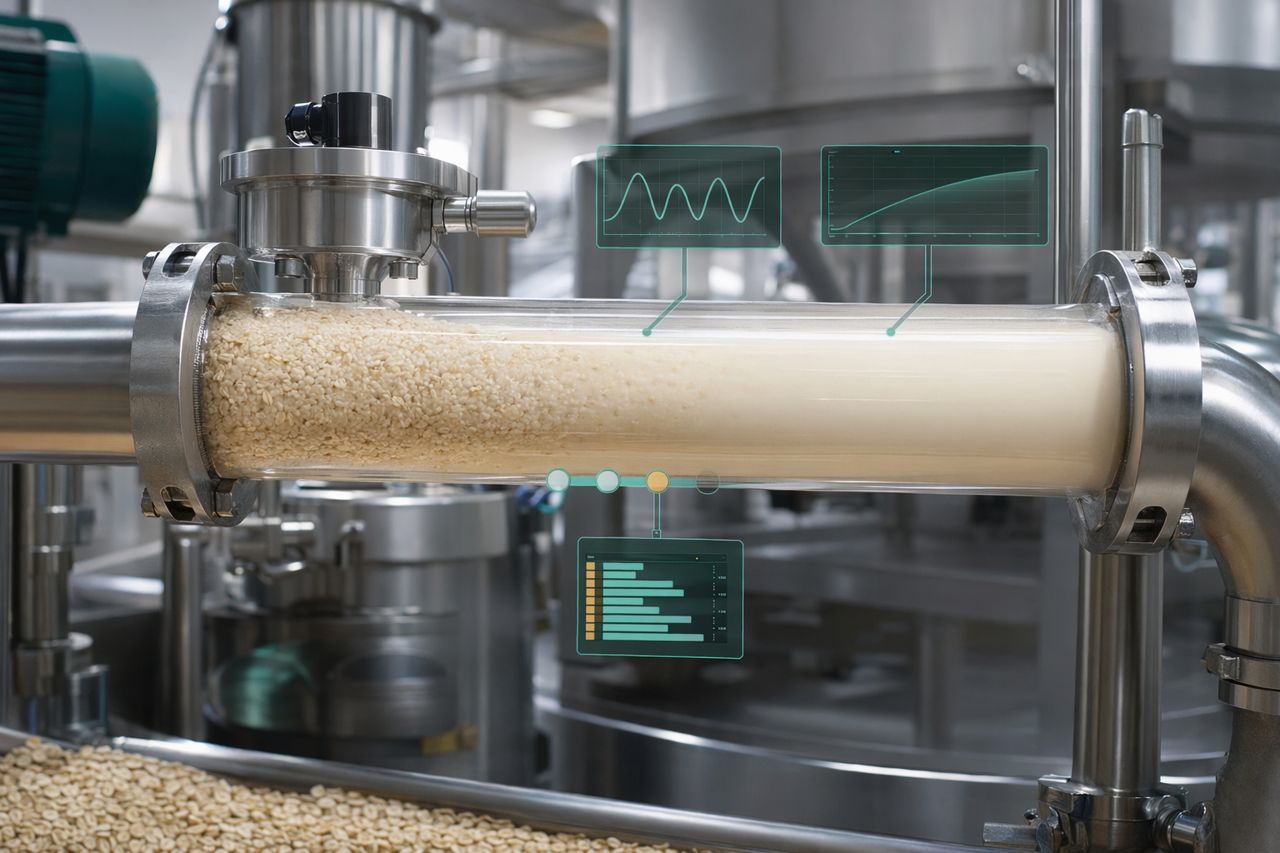
For an oat drink manufacturer, sugar conversion decides three things the business pays for: how sweet the base is before any sugar is added, how well the slurry pumps and filters, and whether every carton tastes the same. The enzymes that do this work in oat milk plants are alpha-amylase to liquefy the cooked oat starch, glucoamylase or beta-amylase to build sweetness, and beta-glucanase to keep viscosity and filtration under control.
Enzymesboost supplies these enzymes in bulk to oat beverage manufacturers, co-packers, resellers and biotech companies. This page explains what each one does for your line and your margin, and what to send us so we can quote the right product.
Wholesale and bulk supply. Enzymesboost supplies amylase, glucoamylase and beta-glucanase for oat milk sugar conversion to oat beverage manufacturers, resellers and biotech companies. Pricing and supply terms are quoted per order. To get a quote, send the product, the quantity and the destination country through the inquiry form.
Which enzymes are used for oat milk, and what each one buys you
| Enzyme | Job in the line | What the business gets | When it goes wrong |
|---|---|---|---|
| Alpha-amylase | Liquefies cooked oat starch into a pumpable stream | Faster transfer, better heat exchange, fewer stalled tanks | Too little: heavy, gel-like base. Too much: thin body |
| Glucoamylase | Turns liquefied starch further into glucose | Sweetness from the oat itself, less added sugar on the label | Overshoot pushes sweetness past the product brief |
| Beta-amylase | Releases maltose from the starch chain | Milder, rounder cereal sweetness | Confused with glucoamylase, it gives a different sugar profile |
| Beta-glucanase | Breaks down oat beta-glucan | Lower viscosity, easier filtration and separation | Skipped, the base stays slimy no matter how much amylase is added |
The order matters: liquefy first, then build sweetness, and manage beta-glucan before separation. A plant that adds more amylase to fix slime that comes from beta-glucan ends up with a watery, over-sweet base and the same filter problem. Hemicellulase is a further enzyme group that acts on cereal cell wall fiber, and this page covers industrial hemicellulase.
Why buyers now ask for oat-specific amylase
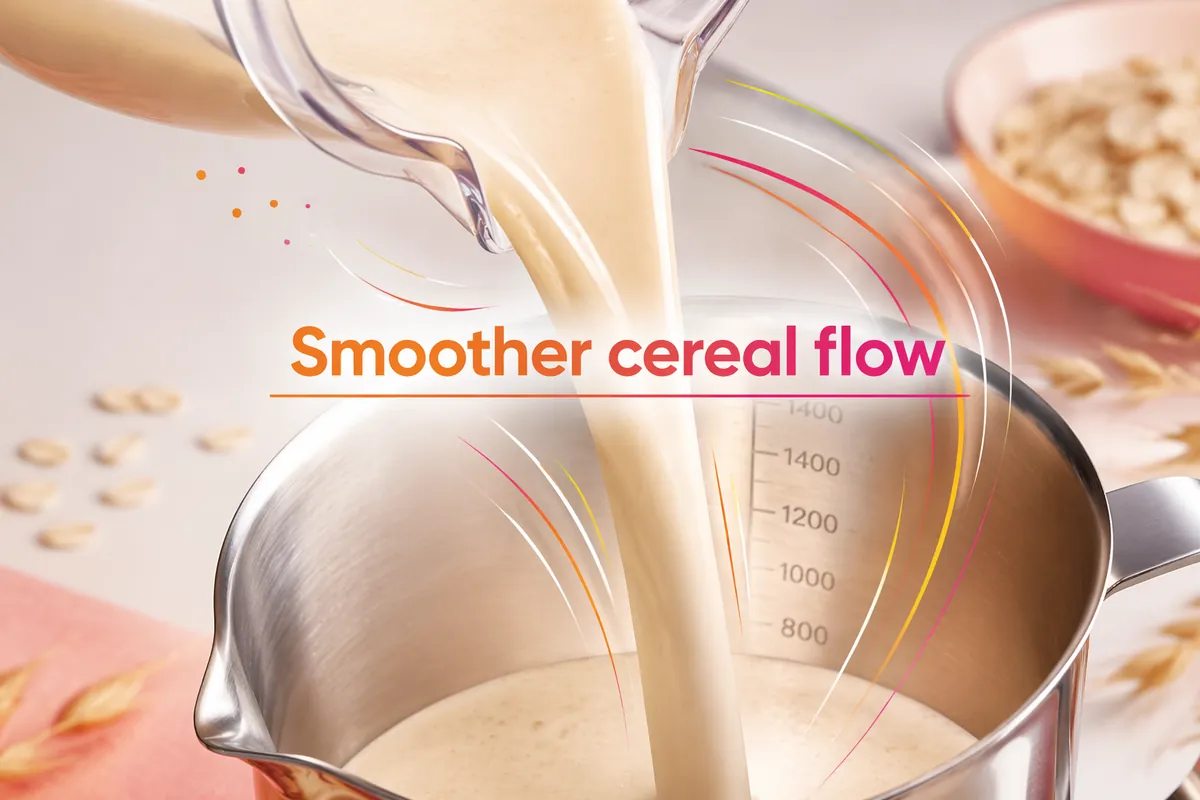
Amylase made specifically for oat milk lines is replacing general starch enzymes. The problem it is sold to solve is hydrolysis that runs out of control and ruins the mouthfeel: buyers want a base that is smooth, not pasty, and still smells of oats.
Two lessons for buyers follow from this. First, the selling point for these products is control of texture and flavour, not maximum conversion: a base that is converted too far loses body and oat character. Second, the market is moving towards application-specific oat preparations, so when you compare offers, compare them on the result in your base, not on the enzyme name alone.
The business case: sweetness from the grain, throughput on the line
- Label: sweetness built from oat starch can reduce how much sugar the formulation has to add.
- Throughput: a liquefied base moves through pumps, heat exchangers and holding tanks with fewer slowdowns.
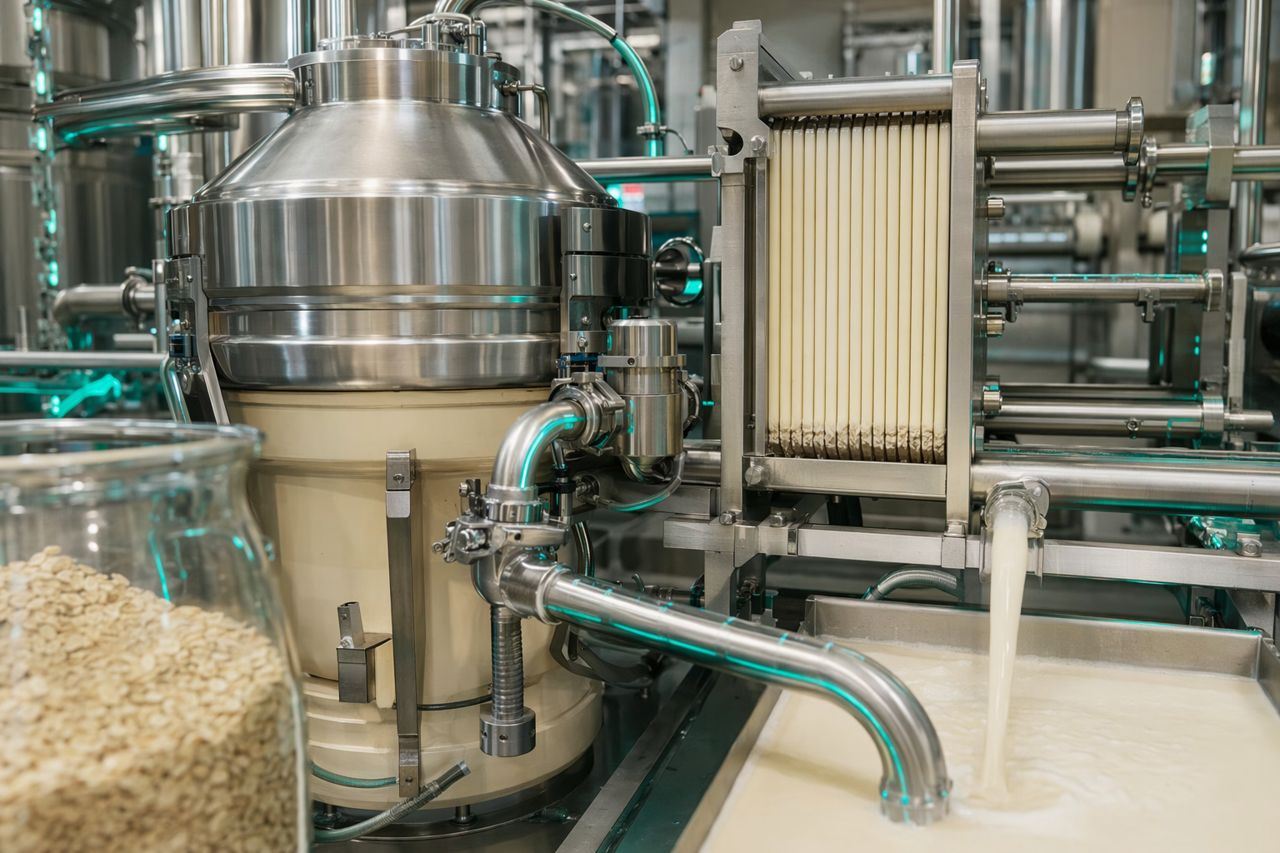
- Filtration and yield: controlled starch and beta-glucan breakdown helps the separator or filter run steadily and recover more extract.
- Consistency: a defined conversion step keeps sweetness and body closer to target when the oat lot changes.
- Less rework: fewer thick, gummy or slow batches that need correction before filling.
Dextrins, maltose and glucose: what the balance changes
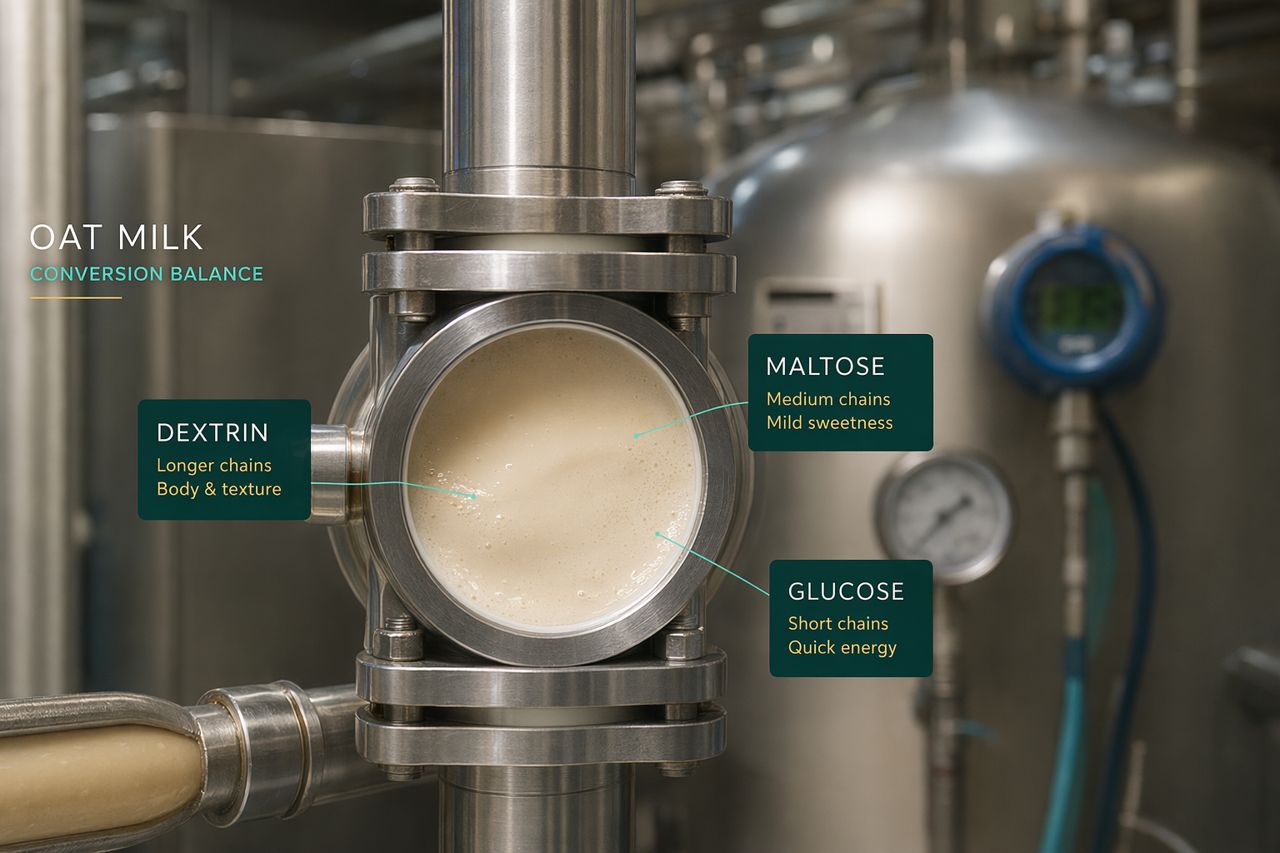
Dextrins keep body and a fuller texture, but too many leave viscosity and filter load behind. Maltose gives a mild, rounded cereal sweetness. Glucose gives the most direct sweetness, and too much of it can push the drink beyond the intended taste or complicate nutrition targets.
The right balance depends on the product. A barista oat drink usually needs body, foam behaviour and heat stability. A lighter ready-to-drink oat beverage may put clean sweetness, low viscosity and easy filtration first. We match the enzyme choice to that brief.
Avoiding over-conversion
More conversion is not always better. Over-conversion thins the body, shifts the sweetness and makes the drink feel lighter than the brief. Before you change enzyme or dose, ask these questions:
- How quickly does the slurry reach the flow you need, and does it keep thinning after the hold?
- Is the enzyme stopped by a heat step soon after the hold, or does conversion continue in the tank?
- Does sweetness stay stable when the oat lot changes?
- Is filtration improving without losing body?
- Does the finished drink match the sensory target after heat treatment and storage?
Request a quote
Enzymesboost works with buyers, not hobby users: oat drink manufacturers, co-packers, ingredient resellers and biotech companies. We quote alpha-amylase, glucoamylase, beta-amylase and beta-glucanase for oat milk sugar conversion, for a first trial or for production volumes.
In your inquiry, please include:
- Product: the enzyme you use now, or the result you need (for example more natural sweetness, a thinner slurry or easier filtration)
- Quantity: a trial amount, a first production order, or expected monthly volume
- Destination: the country and site the enzyme ships to
- Process notes (optional): oat flour, flakes or whole oats; slurry solids; hold temperature and time; separation method; sweetness and body targets
Pricing, pack options and supply terms are quoted per order. Send your inquiry through the form.