Keeping Oat Base Consistent Across Multiple Production Sites
Scaling oat milk from one dependable line to several production sites can expose every weak point in the process. A recipe that runs cleanly in one factory may produce a thicker mash, slower filtration, variable sweetness, or a less stable mouthfeel in another.
The issue is rarely one single parameter. Oat raw material, mill profile, water chemistry, heat transfer, residence time, holding tank geometry, and separation equipment all influence how the oat base behaves. Enzymes sit at the center of that system because they determine how starch and beta-glucan are converted into a pumpable, filterable, repeatable beverage base.
Enzymesboost works as an enzyme supplier for oat milk production with a focus on plant-floor consistency: controlled viscosity reduction, predictable conversion, improved filtration performance, and fewer troubleshooting loops between sites. We supply manufacturers running several plants, and the resellers who serve them, wholesale and quoted per order.
Wholesale and bulk supply. Enzymesboost supplies one consistent enzyme supply for oat base across several production sites to oat beverage manufacturers, resellers and biotech companies. Pricing and supply terms are quoted per order. To get a quote, send the product, the quantity and the destination country through the inquiry form.
Why multi-site oat milk production drifts
Oat base consistency depends on a narrow process window. When that window moves, the factory sees it quickly.
Common signs include:
- Mash viscosity rising before heat treatment or separation
- Filtration slowing despite the same nominal recipe
- Finished base feeling thin at one site and heavy at another
- Sweetness development varying between batches
- Higher solids losses during separation
- Longer hold times used to compensate for poor conversion
- More operator intervention around temperature, dilution, or recirculation
For a single site, operators can often learn the process behavior and adjust around it. Across multiple sites, informal adjustment becomes expensive. It creates inconsistent product quality, uneven yields, and a higher burden on technical teams.
The enzyme strategy has to travel with the process
A multi-site oat milk program needs more than a standard enzyme addition point. It needs a strategy that can be transferred, validated, and monitored across different equipment layouts.
Enzymesboost supports enzyme selection around the commercial process goals that matter most:
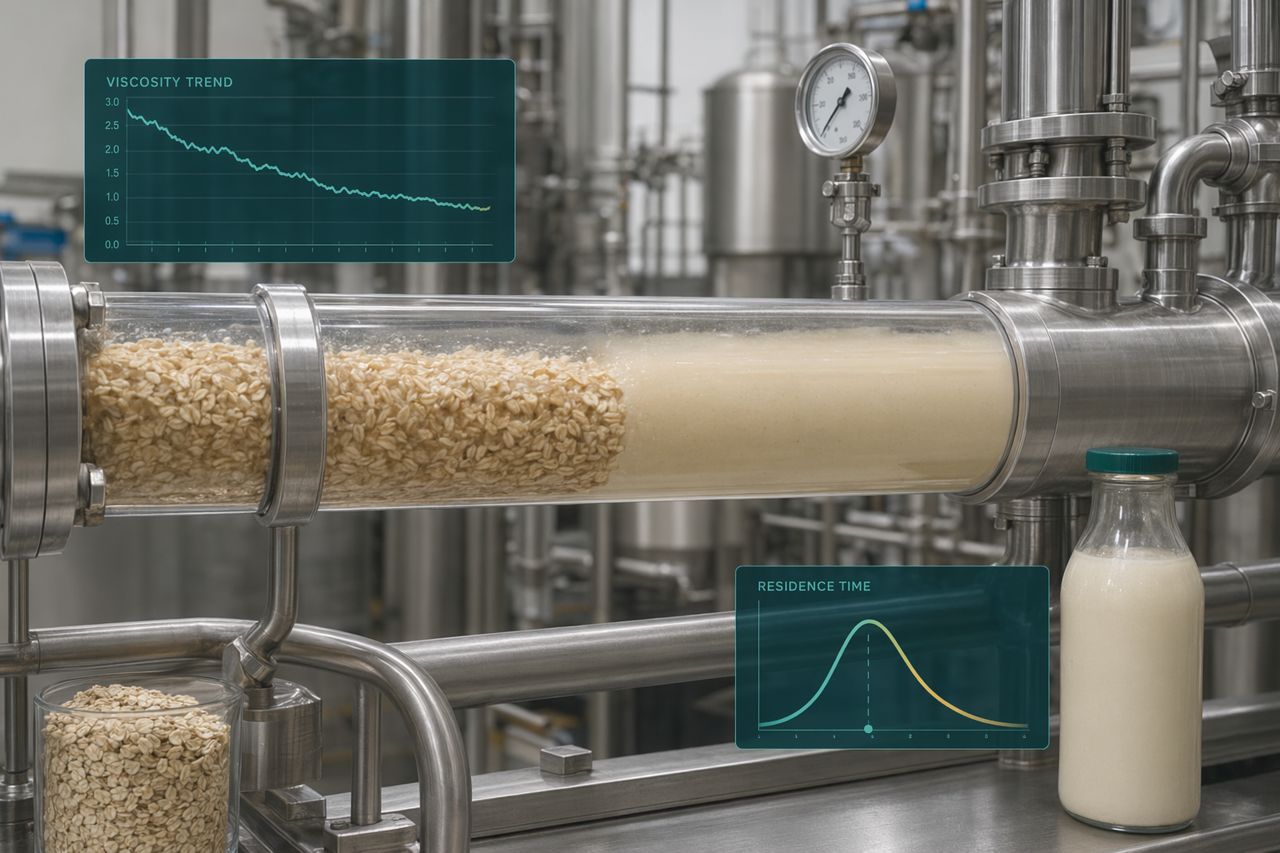
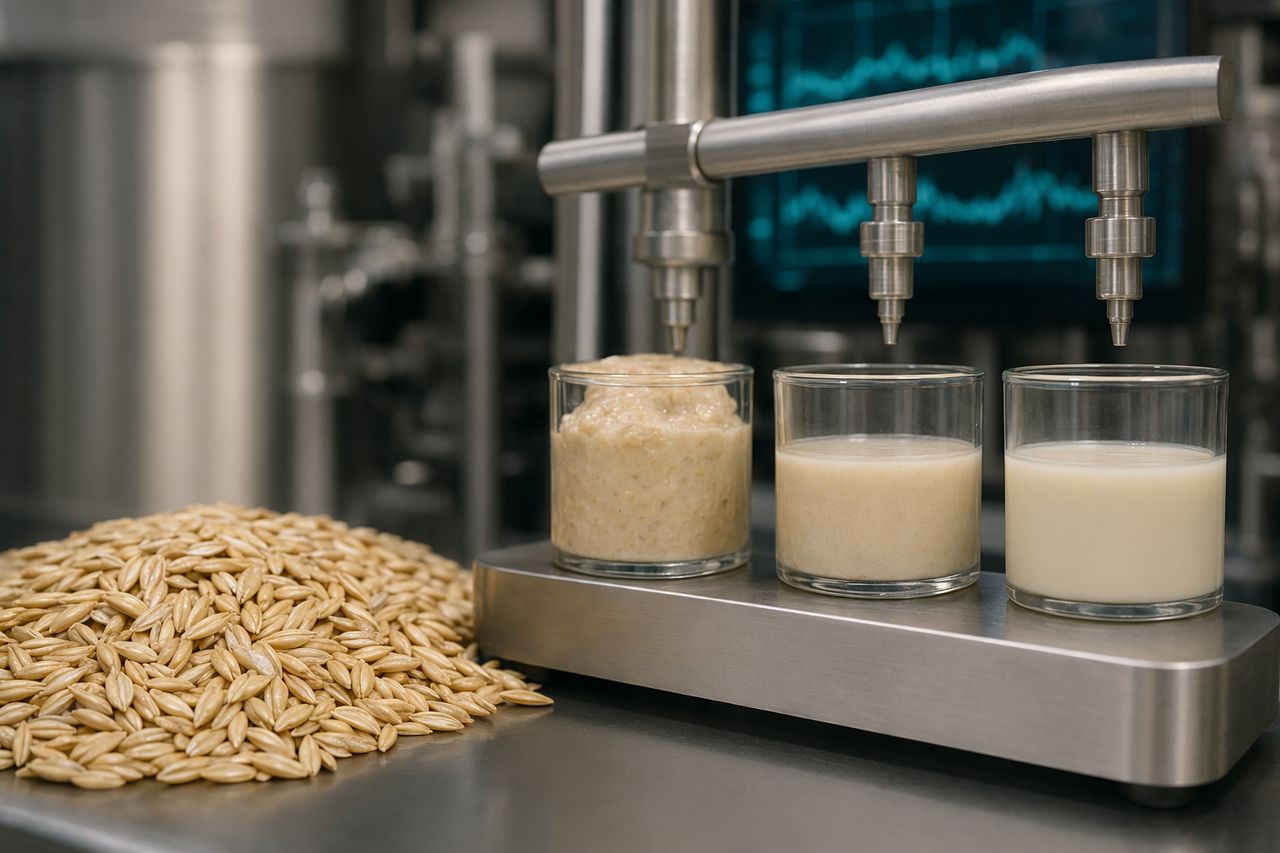
- Viscosity control: reducing mash thickness early enough to improve pumping, heating, and separation
- Filtration performance: helping the base move through downstream clarification or separation steps with fewer bottlenecks
- Conversion consistency: supporting repeatable sweetness and solids behavior without over-processing
- Mouthfeel protection: avoiding an oat base that becomes watery, harsh, or inconsistent after treatment
- Batch stability: narrowing variation between shifts, sites, and raw oat lots
The objective is not maximum breakdown. The objective is controlled conversion that supports the target beverage profile and plant capacity.
Where site-to-site variation typically enters
1. Oat raw material behavior
Different oat lots can hydrate and thicken differently. Kernel quality, starch availability, beta-glucan contribution, and milling profile all influence the starting slurry. If the enzyme program has no operating flexibility, raw material variation quickly appears as inconsistent viscosity and separation performance.
2. Temperature and residence time
Oat milk factories often describe their process using the same setpoints, but the actual residence profile may differ by plant. Heating speed, mixing intensity, pipe length, tank turnover, and dead zones can change the effective conversion window. A robust enzyme program should account for the real thermal and time history of the slurry, not only the setpoint on the control screen.
3. Water and solids loading
Small differences in water chemistry and solids concentration can change how the slurry moves through pumps, heat exchangers, and filters. When solids loading is pushed for yield or throughput, viscosity control becomes even more important.
4. Separation equipment and filtration design
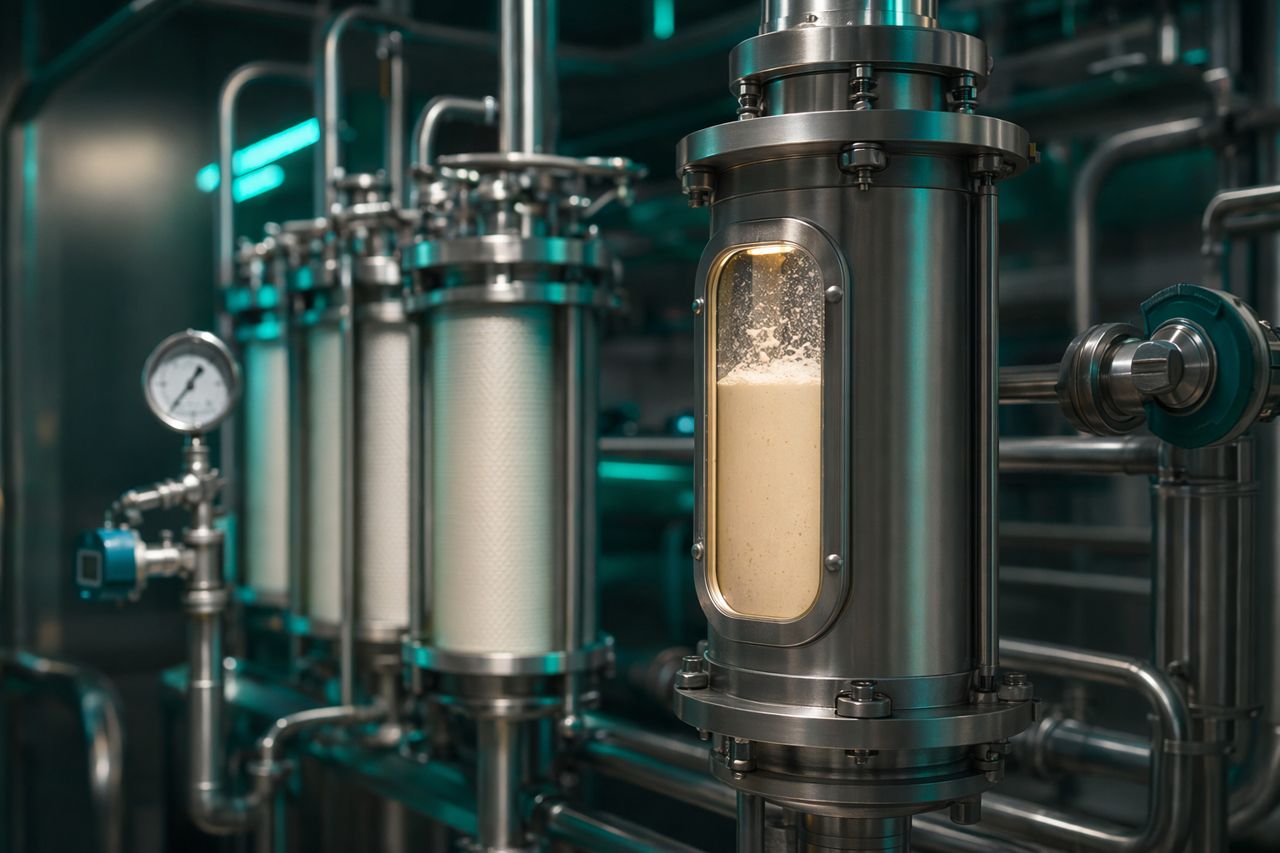
One site may have more tolerance for a thicker base. Another may see immediate pressure rise, slower flow, or lower recovery. Enzyme selection should be matched to the limiting unit operation, especially when filtration or clarification is the rate-setting step.
Building a transferable oat base control plan
Enzymesboost recommends treating enzyme use as part of the process control architecture rather than a simple ingredient addition. For multi-site production, the strongest programs usually define:
- Target viscosity behavior at key process points
- Acceptable conversion range for sweetness and solids profile
- Addition location and mixing conditions
- Temperature and hold-time window for each site
- Filtration or separation performance targets
- Finished base mouthfeel benchmarks
- Corrective-action rules when oat lots or equipment conditions change
This gives production teams a shared language. Instead of saying a batch is “too thick” or “not converting right,” teams can compare process behavior against defined operating markers.
Matching enzymes to the commercial bottleneck
Different oat milk factories need different enzyme priorities. A site limited by mash handling may need faster viscosity reduction before the heat exchanger. A site limited by filtration may need a cleaner conversion profile before separation. A brand protecting a creamy premium profile may need controlled starch conversion while preserving body.
Enzymesboost helps factories evaluate enzyme solutions around the real bottleneck:
- If throughput is constrained by thick slurry: prioritize earlier viscosity reduction and more stable pumpability.
- If filtration is the limiting step: improve base flow behavior and reduce pressure-driven slowdowns.
- If batches vary in sweetness: tighten conversion control across time and temperature differences.
- If mouthfeel changes between sites: refine the enzyme balance to avoid excessive thinning.
- If troubleshooting is consuming technical time: standardize the enzyme decision tree across plants.
The right enzyme program should make the process easier to run, not more complicated to manage.
Practical checks before scaling to another site
Before transferring an oat base recipe to a new factory, process managers should confirm:
- Actual slurry temperature profile from addition through inactivation or downstream processing
- Mixing quality at the enzyme addition point
- Hold-time distribution in tanks, pipes, and heat exchangers
- Solids loading tolerance at the target throughput
- Viscosity trend before and after conversion
- Filtration or separation response under normal production flow
- Finished base sensory profile after downstream treatment
- Operator adjustment patterns during startup, steady state, and changeover
These checks help identify whether variation is caused by enzyme fit, equipment behavior, raw material changes, or process control gaps.
What consistent oat base gives the factory
When enzyme performance is aligned across sites, the benefits show up in daily operations:
- More predictable line flow
- Fewer filtration slowdowns
- Better batch-to-batch texture control
- Reduced dependency on operator workaround
- Cleaner transfer from pilot or first site to additional plants
- More consistent finished beverage quality
- Improved confidence when changing oat lots or increasing throughput
For multi-site oat milk production, consistency is a commercial advantage. It protects the brand experience while helping factories run closer to plan.
Request a quote
Enzymesboost works with buyers, not hobby users: oat drink manufacturers, co-packers, ingredient resellers and biotech companies. If you are comparing sites, adding a plant or trying to reduce filtration and texture variation between sites, we can quote one enzyme supply for all of them.
In your inquiry, please include:
- Product: the enzyme you use now, or the result you need (for example the same viscosity and sweetness at every site)
- Quantity: a trial amount, a first production order, or expected monthly volume
- Destination: the country and site the enzyme ships to
- Process notes (optional): number of sites, oat source per site, equipment differences, where the drift shows up
Pricing, pack options and supply terms are quoted per order. Send your inquiry through the form.