Oat Beta-Glan: Balancing Mouthfeel, Health Perception, and Factory Processability
Oat beta-glucan is part of what makes oat milk feel like oat milk. It contributes body, visual opacity, and the creamy perception consumers associate with a premium plant-based drink. It also sits at the center of several plant-floor problems: high slurry viscosity, slower separation, filter loading, heat-transfer drag, inconsistent sweetness development, and batch-to-batch texture drift.
For an oat milk factory, the question is not whether beta-glucan is good or bad. The practical question is how much process resistance the line can tolerate while still delivering the sensory profile the brand wants.
Enzymesboost supplies enzyme systems for oat milk production that help factories hold that balance: enough oat structure for mouthfeel, enough conversion and viscosity control for reliable throughput.
Why beta-glucan matters in oat milk
Beta-glucan is a soluble oat fiber that hydrates during slurry preparation and thermal processing. In the finished beverage, it can support:
- Creamier mouthfeel without relying only on added fat
- A fuller oat identity and better body
- A stronger consumer perception of wholesome grain content
- Improved suspension and visual richness when properly managed
Those are commercial advantages. The challenge is that the same hydration behavior can raise viscosity during production, especially when paired with oat starch gelatinization and fine insoluble particles.
When beta-glucan is not controlled, it does not just change texture. It changes how the factory behaves.
Where factories feel the problem
High beta-glucan impact usually shows up as a cluster of symptoms rather than one isolated issue:
Slurry handling becomes less forgiving
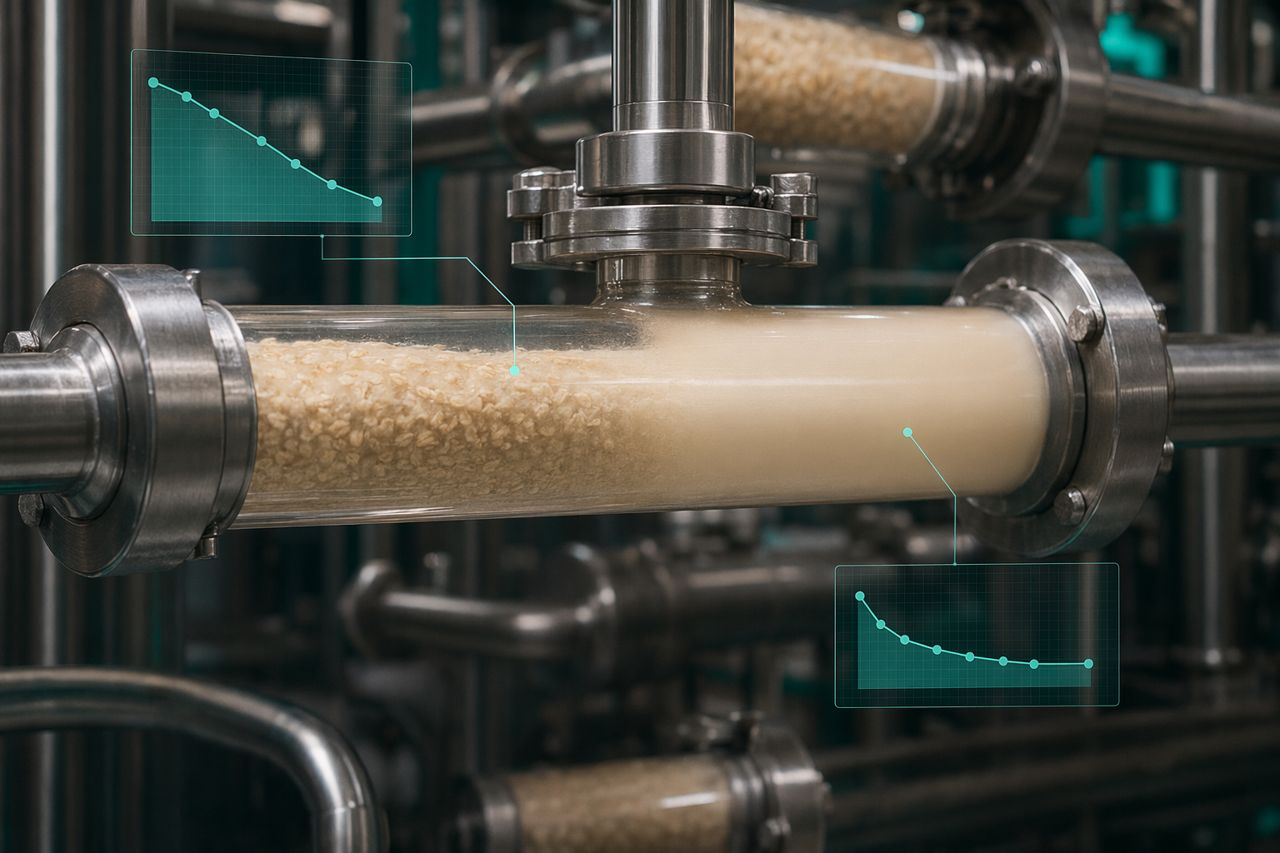
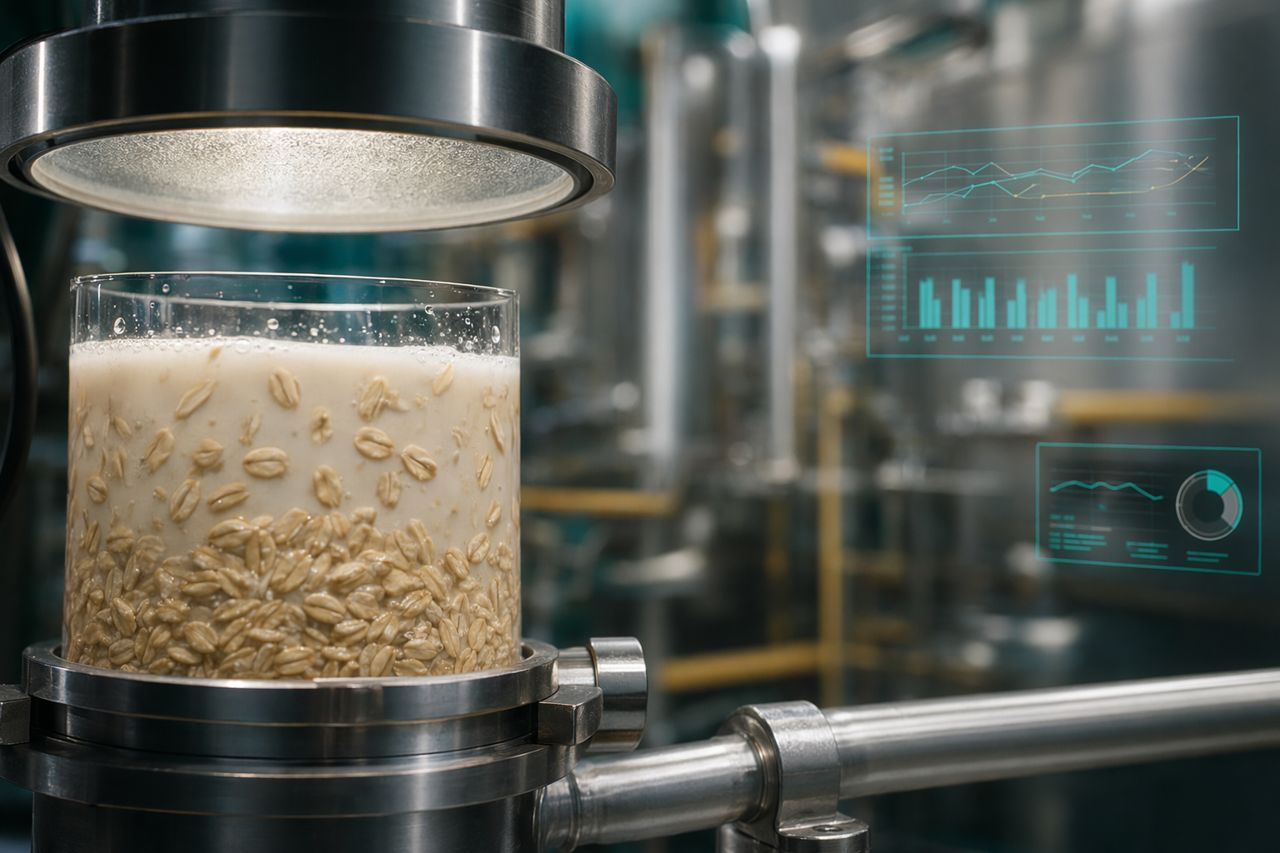
A thick oat slurry can reduce pump efficiency, increase transfer time, and make the process more sensitive to small changes in water ratio, oat lot, grind profile, or cook conditions.
Separation and filtration lose capacity
Viscous liquid phases carry solids differently. Filters can blind earlier, separators may need slower operation, and recovery from a difficult batch can consume operator time that should be used for production.
Heat transfer becomes less predictable
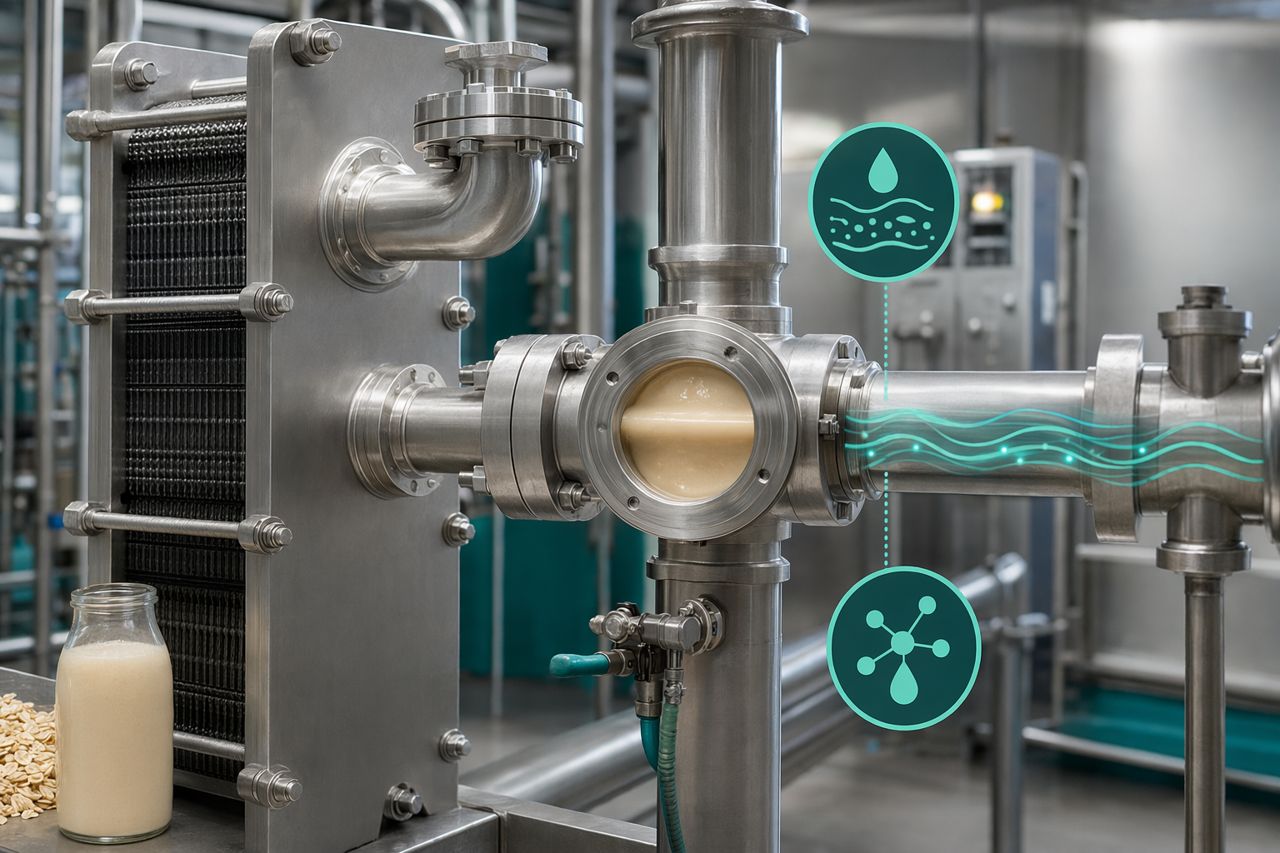
A heavier slurry can create uneven heating, slower temperature response, and higher fouling pressure on heat exchange surfaces. That affects both product consistency and cleaning intervals.
Finished beverage texture can drift
Too little structure and the drink feels thin. Too much uncontrolled structure and it can feel gluey, heavy, or unstable after heat treatment and storage. The target is not maximum thickness. The target is controlled creaminess.
The enzyme strategy: shape the matrix, do not erase the oat
Enzymesboost approaches oat milk enzyme design as a process-control tool. The goal is to manage starch conversion and beta-glucan contribution together, so the plant can run smoothly while keeping the oat beverage profile intact.
A practical enzyme program may support:
- More consistent viscosity across slurry preparation and holding
- Controlled starch breakdown for sweetness, solids balance, and smoother mouthfeel
- Reduced process drag before separation or filtration
- Better repeatability when oat raw material varies by crop, supplier, or particle size
- Less troubleshooting around slow batches, fouling, or final texture variation
This is where an experienced enzyme supplier for oat milk production adds value. The enzyme recommendation should fit the real line: oat flour or whole grain input, hydration method, cook profile, residence time, target sweetness, separation setup, thermal process, and desired finished texture.
Mouthfeel and processability are not opposites
Many factories treat mouthfeel and throughput as a trade-off: keep more oat structure and accept a harder process, or break the system down and risk a thinner drink.
That is too blunt.
A better approach is to define the operating window:
- What viscosity range keeps pumping stable?
- Where does filtration performance start to fall away?
- How much natural sweetness is desirable from conversion?
- What texture should remain after homogenization and heat treatment?
- Which oat lots create the most variation?
- Where does the line currently spend the most time troubleshooting?
Once those constraints are clear, enzyme selection becomes more commercially useful. The objective is not maximum hydrolysis. It is predictable conversion that protects both the sensory target and the production schedule.
What process managers should watch
For plant teams evaluating beta-glucan control, the most useful indicators are often operational rather than academic:
- Slurry viscosity trend during cook and hold
- Pump load and transfer time between stages
- Filtration or separation rate over the batch
- Heat exchanger pressure behavior and fouling tendency
- Final beverage body after thermal processing
- Batch-to-batch variation across oat lots
- Cleaning frequency and recovery time after difficult runs
These are the signals that connect enzyme performance to factory value.
How Enzymesboost supports oat milk producers
Enzymesboost works with oat milk manufacturers to select enzyme solutions around plant reality, not generic assumptions. We focus on the points that matter to production and commercial quality:
- Throughput protection during slurry handling and separation
- Viscosity control without flattening oat character
- Consistent conversion across variable raw material
- Cleaner downstream processing and fewer difficult batches
- Finished beverage texture aligned with brand positioning
Whether the target is a barista-style oat drink, a neutral base for flavored products, or a lower-troubleshooting high-volume line, the enzyme system should be tuned to the factory’s process window.
Practical buyer value
A well-matched oat milk enzyme program can help a factory reduce the cost of inconsistency. That value shows up in several places:
- Fewer slow batches caused by heavy slurry behavior
- More predictable filtration and separation performance
- Reduced operator intervention during difficult runs
- Better control of mouthfeel across oat raw material variation
- Improved confidence when scaling recipes from trial to production
- A clearer path to consistent product quality without over-processing the oat base
For B2B buyers, this is not only a formulation question. It is a production reliability question.
Request an oat milk enzyme quote
If beta-glucan is helping your mouthfeel but complicating your process, Enzymesboost can help you evaluate a better enzyme approach for your line.
Share your oat input, process flow, target texture, and current bottleneck. We will recommend an enzyme solution built around your plant conditions and production goals.