Scaling Oat Beverage from Pilot Kitchen to Factory: Process Risks That Appear Late
Pilot oat beverage trials can look clean, creamy, and commercially ready. Then the factory run starts, residence time stretches, heat transfer changes, slurry behavior shifts, and the same recipe begins to produce different outcomes.
For a process manager, the issue is rarely one single failure. It is usually a chain: starch conversion affects viscosity, viscosity affects pumping and heat exchange, filtration affects yield, and all of it affects mouthfeel, sediment, and line availability.
Enzymesboost works as an enzyme supplier for oat milk production for manufacturers that need controlled conversion, predictable flow, and repeatable sensory performance at factory scale. Supply is wholesale, in trial and production quantities, quoted per order.
Wholesale and bulk supply. Enzymesboost supplies amylase, glucoamylase and beta-glucanase for oat beverage scale-up to oat beverage manufacturers, resellers and biotech companies. Pricing and supply terms are quoted per order. To get a quote, send the product, the quantity and the destination country through the inquiry form.
Why pilot success does not always transfer cleanly
A pilot kitchen gives the team flexibility. The factory gives the process less room to hide.
At small scale, operators can adjust shear, hold time, hydration, and separation almost by feel. At plant scale, the oat slurry moves through larger vessels, longer pipe runs, tighter production windows, and equipment that may already serve multiple recipes.
The result is that process risks appear late, often after packaging trials, customer samples, or first commercial commitments have already created pressure.
Common late-stage symptoms include:
- Slurry viscosity that rises faster than expected during heating or transfer
- Inconsistent liquefaction between batches
- Slow filtration or centrifuge overload
- Lower extract yield from the same oat input
- Grainy or thin mouthfeel after downstream adjustment
- Sediment formation during chilled storage
- More operator intervention than the line can sustain commercially
These are not simply formulation issues. They are process-control issues.
Viscosity is the first scale-up warning signal
Oat systems are naturally viscosity-sensitive. Starch, beta-glucan, particle size, hydration, and heat history all influence how the slurry moves through the plant.
In pilot work, a thick slurry may still be manageable. At factory scale, that same viscosity can reduce heat transfer efficiency, slow pumping, strain homogenization, and create inconsistent residence time.
A practical enzyme strategy helps convert the oat matrix into a more pumpable, controlled stream before the process becomes difficult to manage. The goal is not maximum breakdown. The goal is the right conversion profile for the desired beverage: smooth flow, stable yield, and a mouthfeel that still reads as oat milk rather than diluted cereal water.
Conversion control matters more than aggressive breakdown
In oat beverage production, more conversion is not automatically better. Over-processing can flatten body, create excess sweetness, or make the finished drink feel less creamy. Under-processing can leave a heavy slurry, reduce separation performance, and create sediment risk.
The factory target is a controlled conversion window that supports:
- Reliable transfer between vessels
- Stable heat treatment behavior
- Efficient separation or filtration
- Consistent solids recovery
- Balanced sweetness development
- Creamy, clean mouthfeel
- Reduced batch-to-batch correction
Enzymesboost helps production teams select enzyme solutions around the intended process conditions, not around a generic ingredient label.
Filtration and separation reveal hidden process weakness
Many oat beverage scale-up problems become visible at the filter, decanter, or centrifuge. Upstream slurry behavior determines how hard these assets must work.
If conversion is incomplete or inconsistent, separation performance becomes less predictable. Operators may compensate with slower throughput, additional water, longer hold times, or more frequent cleaning. Each correction protects the batch but weakens the business case.
A cleaner enzyme-controlled process can support better line rhythm by helping the oat stream reach separation with more predictable viscosity and particle behavior.
That matters commercially because filtration is not just a quality step. It is a throughput gate.
Mouthfeel must survive the factory, not just the bench
Oat milk buyers expect creaminess, visual stability, and a clean cereal profile. The challenge is that factory corrections made for flow can damage sensory quality.
Adding water to rescue viscosity may thin the drink. Extending heat exposure may shift flavor. Over-conversion may reduce body. Under-conversion may leave starchiness or sediment.
The better route is to build a process window that supports both manufacturability and product identity. Enzymes should be used as control tools: to shape viscosity, conversion, separation, and texture in a coordinated way.
Late risks to check before committing factory capacity
Before moving from pilot to full production, review the process under realistic plant constraints.
1. Hydration and mixing behavior
Oat flour, flakes, or whole-oat inputs do not hydrate identically at scale. Check whether dry addition, water temperature, mixing energy, and hold time create uniform slurry before enzyme action begins.
2. Heat-up profile
A larger vessel changes the time needed to reach the intended operating range. This can alter conversion behavior and batch consistency, especially when the enzyme is active during ramp-up.
3. Residence time distribution
In continuous or semi-continuous systems, actual residence time is not always the same as the calculated average. Short-path and long-path material can create uneven conversion.
4. Pumping and pipework shear
Factory transfer can change particle behavior and viscosity perception. A slurry that looked stable in a pilot tank may respond differently after long pipe runs and valve restrictions.
5. Separation load
Confirm whether the filter, centrifuge, or decanter can sustain target throughput without excessive pressure rise, fouling, or solids loss.
6. Finished beverage stability
Evaluate chilled storage, sediment, viscosity drift, and mouthfeel after the full process sequence, not only immediately after conversion.
Where Enzymesboost fits in the scale-up process
Enzymesboost supplies enzyme solutions for oat milk production with a focus on plant-floor outcomes: controlled viscosity, consistent conversion, efficient separation, repeatable mouthfeel, and fewer troubleshooting cycles.
We support manufacturers working through:
- Pilot-to-factory translation
- New oat beverage launches
- Throughput limitations on existing lines
- Viscosity or filtration instability
- Mouthfeel optimization without excessive dilution
- Batch consistency improvement
- Process changes involving oat source, milling format, or heat profile
Our role is to help define a usable enzyme approach for the line you actually run, including the constraints of your mixing, heating, holding, and separation equipment.
A practical scale-up mindset
The most reliable oat beverage factories do not treat enzymes as a late correction. They use them as part of process architecture.
That means connecting ingredient behavior to equipment reality:
- What viscosity does the pump need?
- What conversion profile does the beverage need?
- What load can the separator tolerate?
- What mouthfeel does the customer expect?
- What variability can the production team manage every day?
When those questions are answered together, scale-up becomes less reactive and more repeatable.
Embedded explainer video
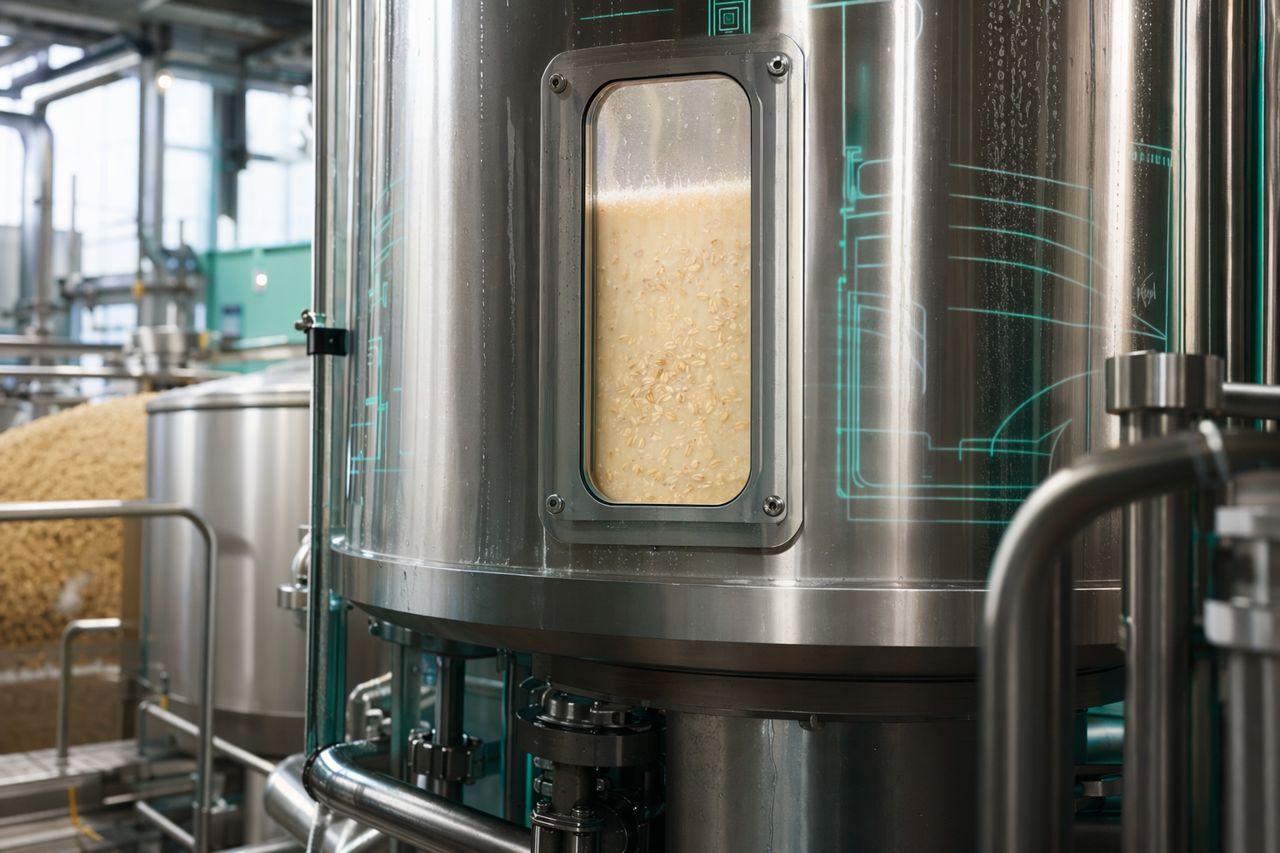
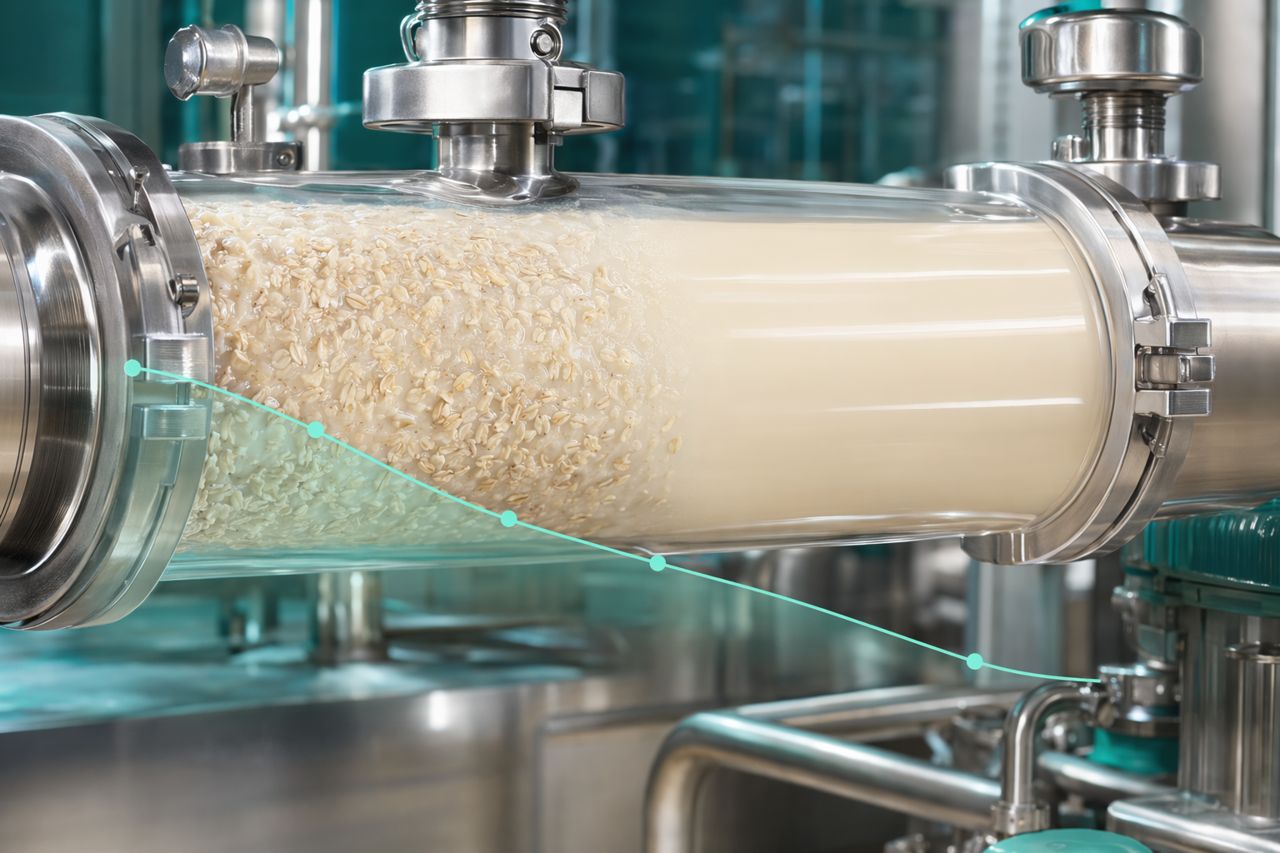
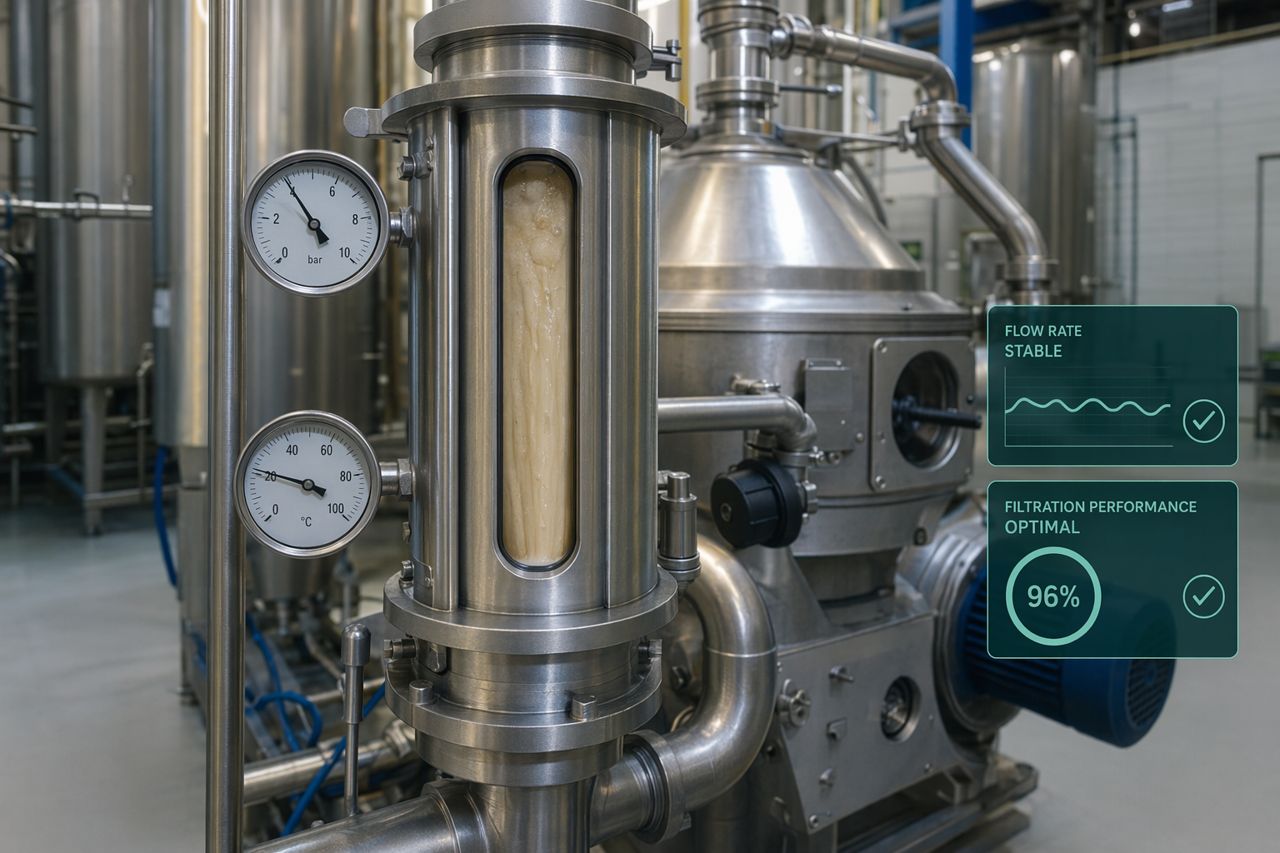
[Faceless explainer video: Scaling oat beverage from pilot kitchen to factory. Visuals show oat slurry moving through stainless process piping, with viscosity, residence time, filtration load, and mouthfeel checkpoints appearing as clean teal overlays.]
Request a quote
Enzymesboost works with buyers, not hobby users: oat drink manufacturers, co-packers, ingredient resellers and biotech companies. If your oat beverage is moving from pilot work into factory production, we can quote the enzymes behind viscosity control, separation, yield stability and texture for your first production runs.
In your inquiry, please include:
- Product: the enzyme you use now, or the result you need (for example a pumpable slurry at plant scale or steadier separation)
- Quantity: a trial amount, a first production order, or expected monthly volume
- Destination: the country and site the enzyme ships to
- Process notes (optional): oat input, process flow, batch size, target beverage style, current bottleneck
Pricing, pack options and supply terms are quoted per order. Send your inquiry through the form.