Enzyme Supplier for Oat Milk Production
Enzymesboost is a wholesale supplier of enzyme systems for oat milk production, for manufacturers, co-packers, resellers and biotech companies whose viscosity, filtration performance, sweetness profile and batch consistency have to stay under control at industrial scale.
For oat beverage manufacturers, the enzyme decision is not just a technical purchase. It affects slurry handling, heat exchanger load, downstream separation, yield stability, sensory profile, and the amount of time your team spends correcting a batch that moved outside target range.
Our enzyme stack focuses on three process roles:
- Amylase for controlled oat starch breakdown
- Glucoamylase for sugar profile adjustment and body refinement
- Beta glucanase for viscosity reduction and smoother process flow
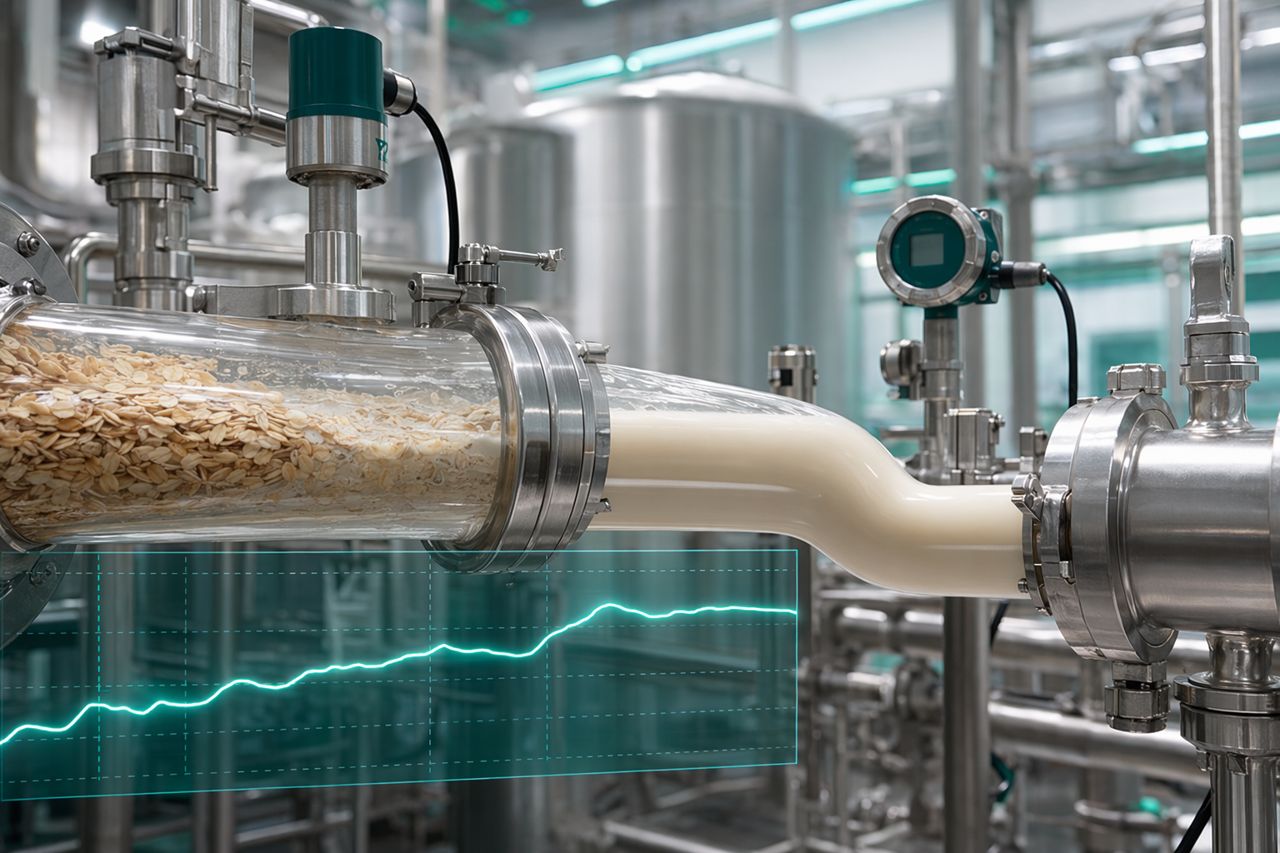
Together, these enzymes help convert a thick oat slurry into a consistent, pumpable, filterable beverage base with the creamy profile consumers expect.
Wholesale and bulk supply. Enzymesboost supplies amylase, glucoamylase and beta-glucanase, alone or as a coordinated stack to oat beverage manufacturers, resellers and biotech companies. Pricing and supply terms are quoted per order. To get a quote, send the product, the quantity and the destination country through the inquiry form.
Built for the realities of oat milk manufacturing
Oat milk production is sensitive to small process shifts. Oat variety, milling profile, hydration, cook temperature, residence time, and shear can all change how a batch behaves. Enzymes give the process team a practical lever to manage starch conversion, beta-glucan viscosity, and final beverage texture.
Enzymesboost supports factories that need repeatable performance across:
- Slurry preparation and liquefaction
- Saccharification and sweetness development
- Viscosity control before separation or filtration
- Mouthfeel balancing before formulation
- Consistency across production runs
- Reduced troubleshooting during scale-up or supplier transition
We speak in plant-floor outcomes: stable flow, predictable conversion, less fouling pressure, smoother filtration, better batch-to-batch control, and beverage texture that holds up through downstream processing.
The three-enzyme stack for oat beverage processing
1. Amylase: starch breakdown for flow and conversion control
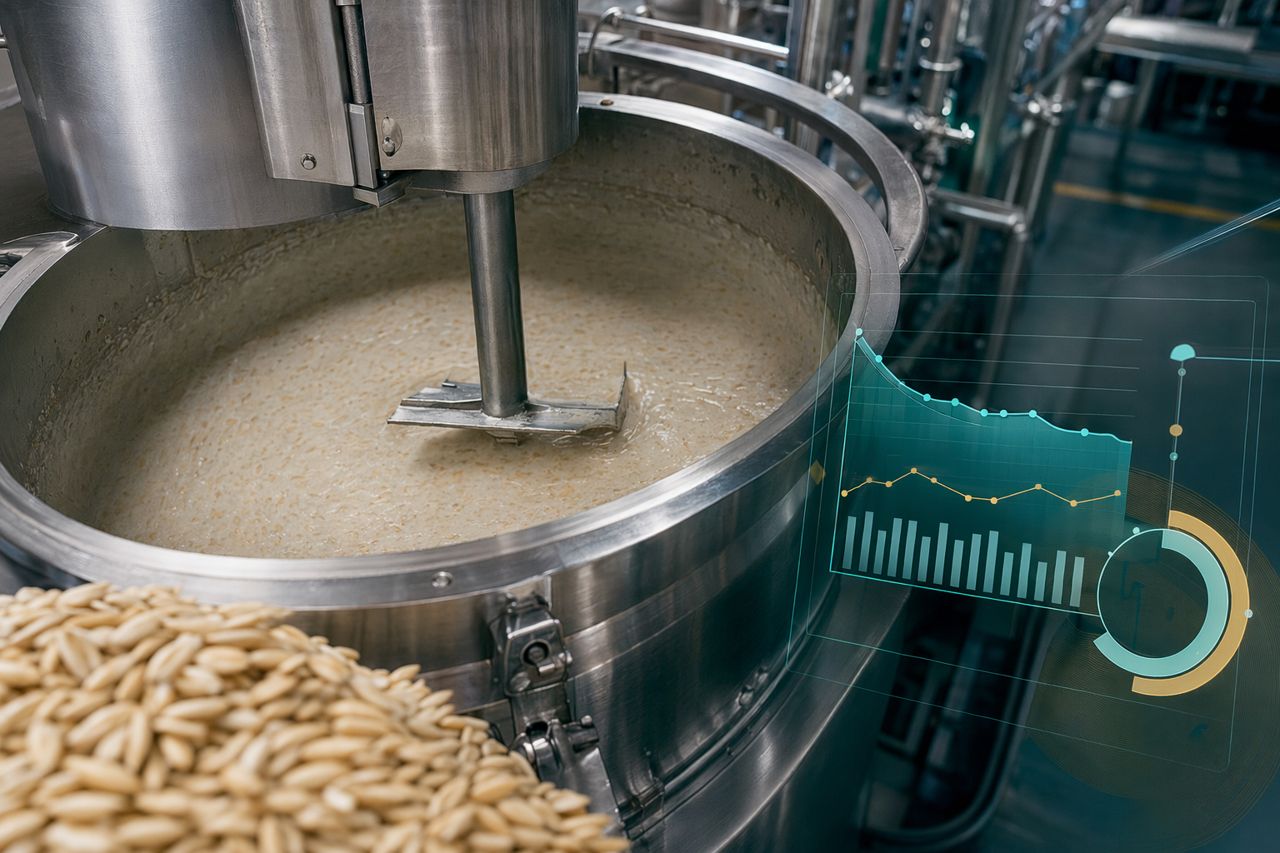
Oats bring starch into the process, and unmanaged starch can quickly create a heavy, unstable slurry. Amylase helps break down oat starch into shorter carbohydrates, reducing thickness and opening the process for more controlled downstream conversion.
In oat milk factories, the right amylase strategy can support:
- Faster movement from cooked slurry to processable beverage base
- Lower viscosity during early conversion
- Improved heat transfer and pumping behavior
- More consistent substrate preparation for glucoamylase
- Reduced risk of thick, uneven batches
Enzymesboost helps match amylase selection to your process window, including temperature profile, residence time, solids level, and desired final body.
2. Glucoamylase: sugar profile adjustment without losing control
Glucoamylase continues carbohydrate conversion by releasing fermentable and flavor-relevant sugars from liquefied starch fragments. In oat milk, this is often used to tune natural sweetness, reduce residual starch character, and support a cleaner beverage profile.
The commercial objective is control. Too little conversion can leave the base heavy or underdeveloped. Too much can push sweetness beyond the product target. Enzymesboost supports glucoamylase use as part of a defined conversion strategy, not as a commodity addition.
Typical process goals include:
- More predictable natural sweetness
- Reduced raw cereal notes from incomplete conversion
- Consistent carbohydrate profile across batches
- Better alignment between base production and final formulation
- Smoother sensory balance before flavor, oil, mineral, or stabilizer additions
3. Beta glucanase: viscosity reduction for filtration and consistency
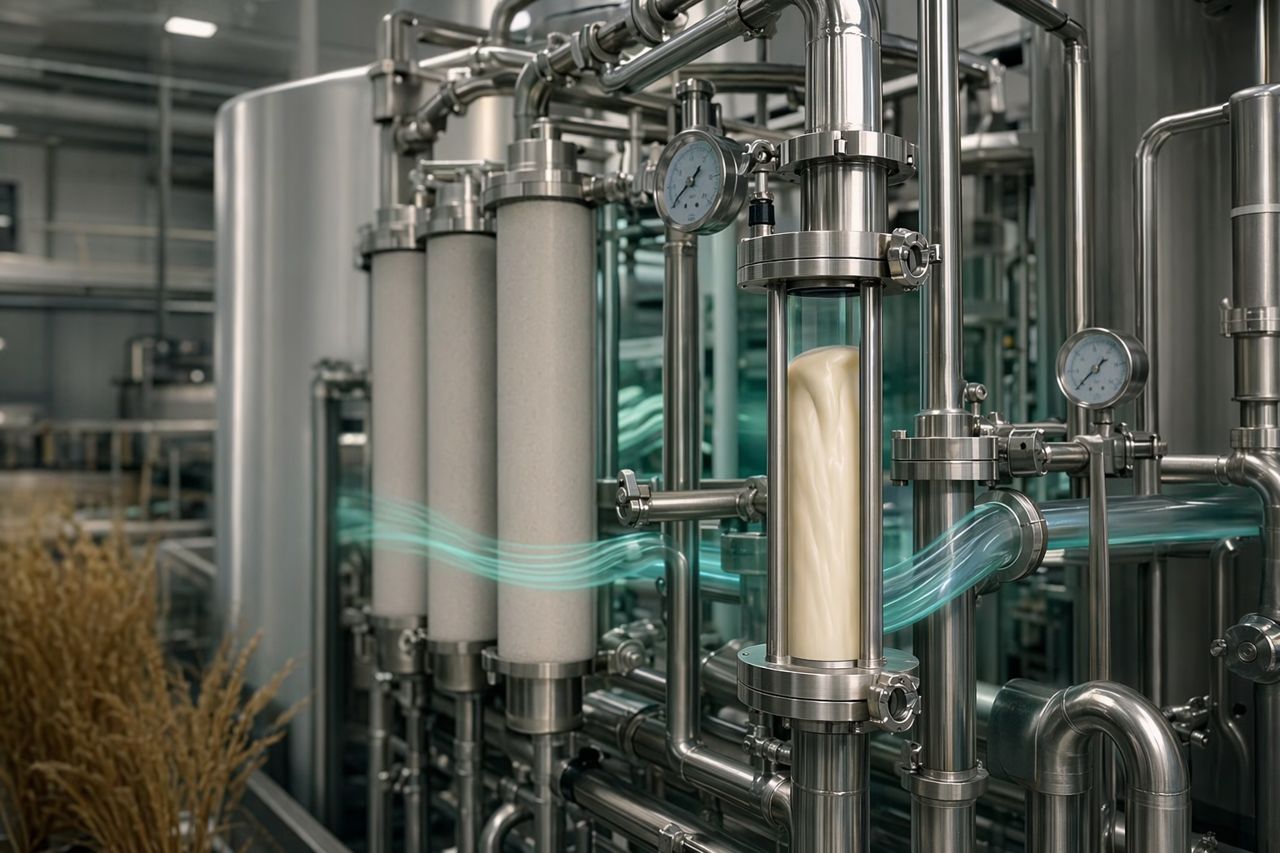
Oat beta-glucans are valuable to the identity of oat beverages, but they can also drive high viscosity, slow separation, membrane stress, and inconsistent flow. Beta glucanase helps manage this viscosity by breaking down long beta-glucan chains that make the slurry difficult to process.
For production teams, beta glucanase is often the difference between a batch that runs cleanly and one that needs repeated adjustment.
It can support:
- Improved pumpability at high oat solids
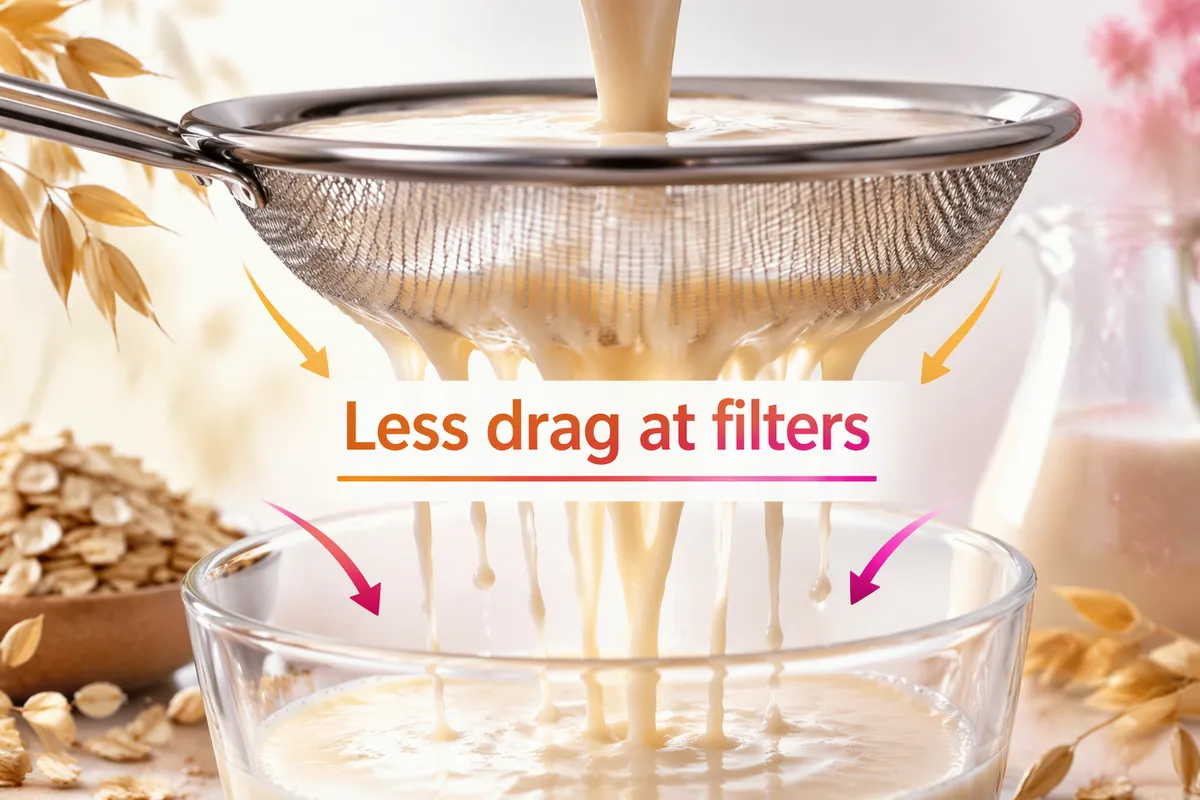
- Better filtration or separation performance
- Reduced pressure build-up in downstream equipment
- More stable flow through heat exchangers
- Controlled creamy mouthfeel without excessive thickness
- Fewer process interruptions caused by unpredictable viscosity
Enzymesboost positions beta glucanase as a precision tool for oat milk texture and throughput, not just a thinning aid.
Why oat milk factories choose an integrated enzyme approach
Using amylase, glucoamylase, and beta glucanase as separate purchasing decisions can create a fragmented process. One enzyme may reduce viscosity while another changes sweetness or body in ways the formulation team did not intend.
Enzymesboost supplies enzyme solutions as a coordinated stack. We help manufacturers align enzyme function with the full oat milk process:
- Hydrate and cook the oat base to gelatinize starch and prepare the substrate.
- Use amylase to control starch breakdown and reduce early slurry heaviness.
- Use glucoamylase to shape sweetness and carbohydrate profile.
- Use beta glucanase to manage beta-glucan viscosity and improve process flow.
- Stabilize the beverage base for filtration, formulation, heat treatment, and filling.
The result is a cleaner operating window and less dependence on reactive adjustments once the batch is already in motion.
Process value for the plant team
Enzymesboost enzyme systems are selected for measurable manufacturing value. Depending on the process design and oat substrate, customers use our enzymes to pursue:
- Higher effective throughput by reducing bottlenecks around viscosity and filtration
- More predictable batch timing from cooking through separation
- Improved beverage base consistency before formulation
- Reduced rework caused by over-thick or under-converted slurry
- Lower operational friction during scale-up from pilot to commercial production
- Cleaner communication between process, quality, and procurement teams
For an oat milk factory, the best enzyme supplier is the one that helps the line run with less uncertainty.
Supply support for commercial oat beverage production
Enzymesboost supports B2B buyers who need more than a product name on a specification sheet. We provide enzyme supply guidance based on process fit, ingredient compatibility, packaging needs, production volume, and commercial continuity.
Our support can include:
- Enzyme stack recommendation for your oat base and process sequence
- Practical starting ranges for in-plant validation
- Compatibility discussion with heating, holding, filtration, and formulation steps
- Transition planning from an existing enzyme supplier
- Documentation support for procurement and quality review
- Scalable supply for pilot, launch, and ongoing production
We do not ask your team to redesign the plant around the enzyme. We help select enzymes that fit the way your oat milk factory actually runs.
Designed for creamy, controlled oat milk
The desired oat beverage is smooth, stable, and recognizably oat-based. It should carry creaminess without becoming gluey. It should flow through the line without constant pressure alarms. It should land within target sweetness and texture so final formulation is predictable.
That is the role of a well-built enzyme stack.
Enzymesboost helps oat milk producers control the key technical variables behind commercial quality:
- Starch breakdown
- Dextrose equivalent progression
- Sugar profile
- Beta-glucan viscosity
- Filtration behavior
- Mouthfeel
- Batch repeatability
Buying for production: packs, storage, reorder and documents
Once the enzyme stack is chosen, the purchasing questions decide whether supply runs smoothly. Use this checklist before you request pricing.
Plan storage before the first delivery
Enzyme purchasing by the kilo should include storage planning. Poor storage discipline can create avoidable variability, even when the enzyme product itself is appropriate.
Clarify:
- Whether the product should be held chilled or under controlled ambient conditions
- How much protected storage space is available
- How opened packs are resealed and consumed
- Who owns first-in, first-out rotation
- How warehouse and production teams identify the correct lot
- Whether seasonal temperature swings affect receiving or staging
Enzymesboost can help align supply format with your site’s handling reality so the product remains easy to manage from goods-in to dosing.
Align pack size with batch frequency
The cheapest pack on paper is not always the most efficient pack for production. Oversized packs can sit open too long. Undersized packs can increase changeovers, receiving work, and reorder pressure.
Before ordering, define:
- Number of oat beverage batches per week
- Typical batch size and campaign length
- Expected enzyme consumption per production window
- Preferred pack handling for operators
- Whether production runs are steady, seasonal, or promotion-driven
- How much safety stock is justified without tying up cash or storage space
For plants with multiple oat beverage formats, pack planning should also account for recipe segmentation. A barista base and a lighter drinking oat beverage may not require the same enzyme strategy.
Build lead time into the reorder point
Enzyme procurement becomes stressful when the reorder trigger is based on memory instead of production planning.
Set a reorder discipline around:
- Average weekly consumption
- Forecasted production campaigns
- Supplier lead time
- Internal goods-in and quality release time
- Minimum stock level
- Safety stock for demand spikes or delayed deliveries
Enzymesboost supports repeat customers with practical reorder planning so enzyme availability stays aligned with the production calendar.
Confirm documentation expectations early
Quality and procurement teams should not have to chase basic documents after a purchase order is raised.
Before approval, confirm the documents your site requires, such as:
- Product specification
- Safety data sheet
- Allergen statement
- Lot traceability information
- Food-grade suitability statement
- Vegan or vegetarian status where relevant
- Non-GMO, kosher, or halal documentation where required by your market
- Country-of-origin or customs information where relevant
Documentation requirements vary by customer, export route, retailer program, and internal quality system. Share these expectations early so they are part of the quotation process, not an afterthought.
Look for supplier fit, not just ingredient availability
Enzymesboost is built for oat beverage manufacturers that need enzyme supply connected to commercial production outcomes.
A strong supplier should be able to discuss:
- How the enzyme supports viscosity control and process flow
- How supply format affects handling and storage
- How reorder timing can reduce production risk
- How lot documentation supports quality release
- How enzyme selection affects filtration, yield stability, and beverage consistency
- How to support scale-up, recipe changes, or new oat beverage formats
This is the difference between buying a line item and building a controlled production input.
Quote preparation worksheet
To receive a focused quote, prepare the following information for Enzymesboost:
- Oat beverage type: barista, chilled, ambient, flavored, high-protein, or other
- Current production scale and batch frequency
- Oat base type and target solids range
- Current viscosity, filtration, or mouthfeel challenge
- Process temperature profile and enzyme addition point
- Desired sweetness and texture direction
- Current storage constraints
- Preferred pack size or handling limit
- Required documents for quality approval
- Target first delivery date and ongoing reorder frequency
You do not need every detail finalized before contacting us. The goal is to start with enough context to quote the right enzyme supply option for your plant.
When to review your current enzyme supply
Consider reviewing your enzyme procurement if you are seeing:
- Slurry viscosity drifting between batches
- Slower filtration or separation than planned
- Excessive operator adjustment during hydrolysis
- Inconsistent sweetness development
- Grainy, heavy, or unstable mouthfeel
- Frequent urgent orders or stockouts
- Too many open packs on the plant floor
- Quality documents arriving late or incomplete
- New oat beverage formats entering production
These are not just technical annoyances. They affect throughput, labor, line confidence, and finished product consistency.
Request a quote
Enzymesboost works with buyers, not hobby users: oat drink manufacturers, co-packers, ingredient resellers and biotech companies. We quote amylase, glucoamylase, beta-glucanase or a coordinated oat milk enzyme stack, for a trial or for production volumes.
In your inquiry, please include:
- Product: the enzyme you use now, or the result you need (for example viscosity control, natural sweetness or steadier filtration)
- Quantity: a trial amount, a first production order, or expected monthly volume
- Destination: the country and site the enzyme ships to
- Process notes (optional): oat solids target, process temperature window, residence time, filtration method, desired sweetness, required documents, preferred pack size
Pricing, pack options and supply terms are quoted per order. Send your inquiry through the form.