Common Filtration Bottlenecks in Oat Milk Plants
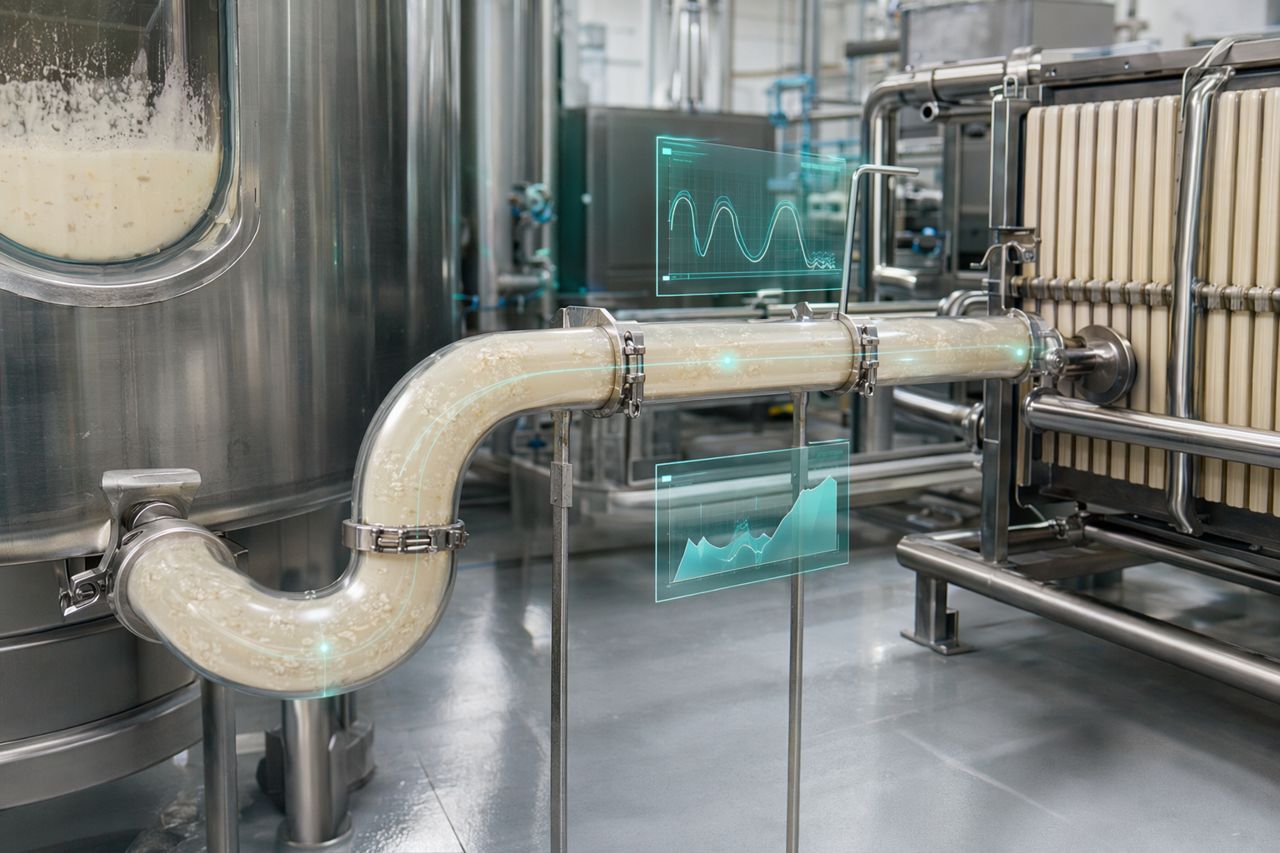
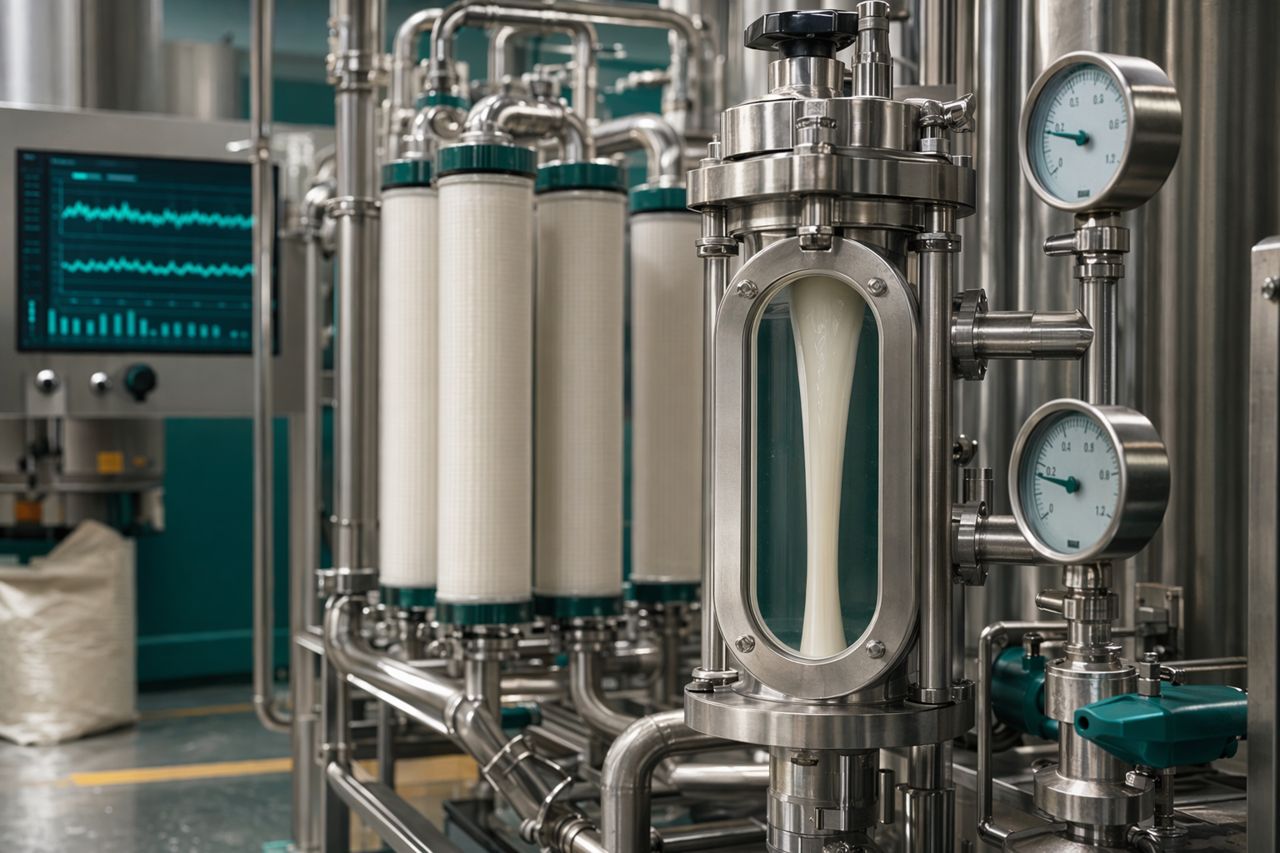
Filtration is often where oat milk production shows its real process discipline. Upstream milling and slurry preparation may look stable, but the filter line reveals whether starch conversion, beta-glucan management, suspended solids, and thermal timing are working together.
When filtration slows, the issue is rarely just the filter. It is usually a system problem: slurry viscosity, particle size distribution, enzyme timing, hold temperature, insoluble fiber load, and recirculation behavior all meeting at one piece of equipment.
Enzymesboost supports oat milk manufacturers that need smoother filtration, more consistent batch behavior, and fewer troubleshooting cycles. As an enzyme supplier for oat milk production, we focus on practical plant outcomes: controlled viscosity, improved filterability, stable yield, and beverage texture that stays commercially acceptable.
Why oat milk filtration becomes a bottleneck
Oat slurry is naturally challenging. Oats bring starch, beta-glucans, proteins, lipids, bran particles, and fine insoluble material into the process. These components are valuable for nutrition, body, and mouthfeel, but they can also create high viscosity and uneven flow if not managed correctly.
Common symptoms include:
- Slower-than-expected filtration rates
- Rapid pressure rise across screens or membranes
- Frequent filter changeouts or backflush cycles
- Inconsistent solids carryover between batches
- Sediment risk in finished beverage
- Loss of extractable oat solids into side streams
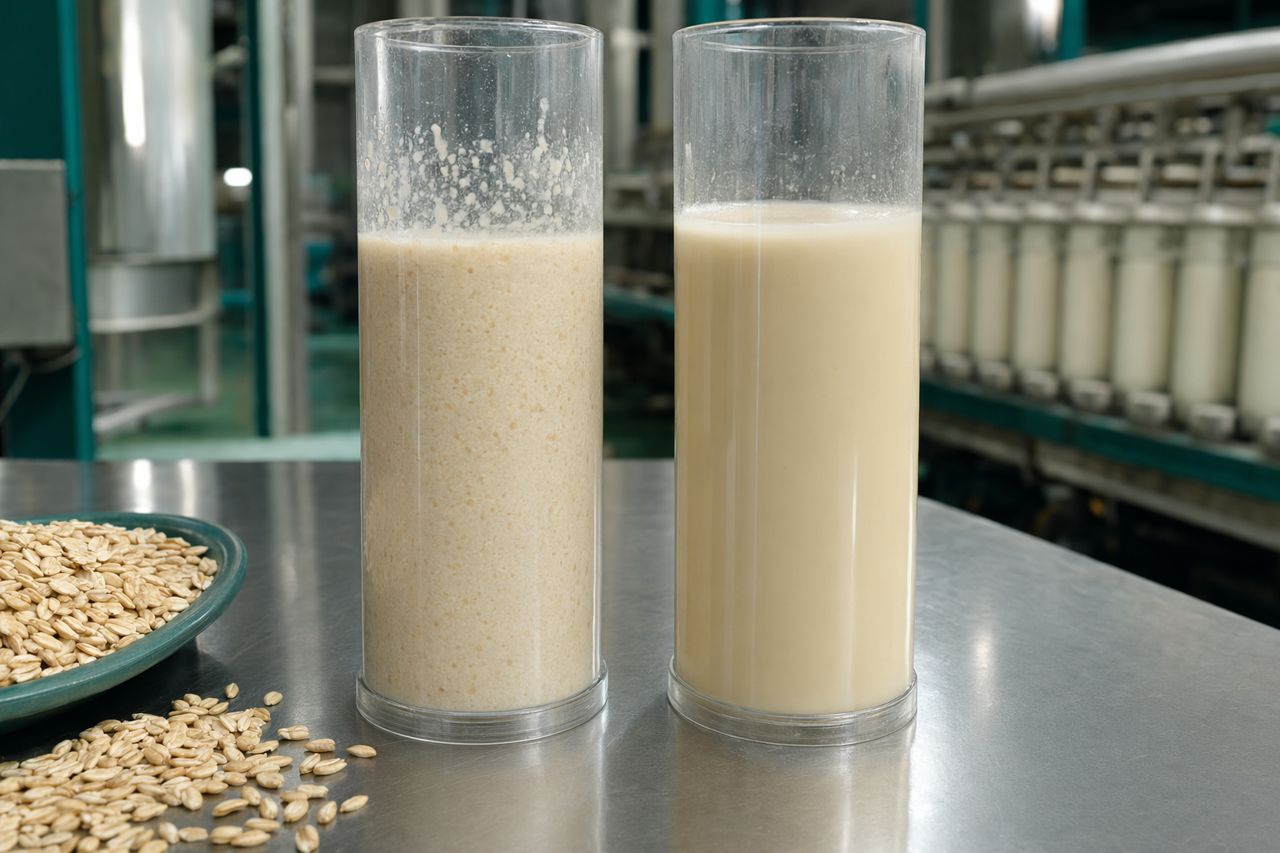
- Overcorrection that produces thin, watery mouthfeel
The best filtration improvement programs do not simply push harder through the filter. They make the slurry easier to filter before it reaches the filter.
Bottleneck 1: viscosity is too high before separation
High viscosity is one of the most common causes of slow filtration in oat milk plants. Even moderate increases can reduce flow, increase pressure, and make separation less predictable.
Viscosity is typically influenced by:
- Starch gelatinization and partial hydrolysis behavior
- Beta-glucan contribution to slurry thickness
- Milling profile and fine particle load
- Hydration time before enzymatic treatment
- Temperature control during conversion
- Residence time before filtration
If the slurry enters filtration with uncontrolled viscosity, operators may compensate by extending run time, increasing dilution, changing filter aids, or accepting lower throughput. Each option has a cost.
A well-designed enzyme step can reduce viscosity in a controlled way while preserving the creamy, full sensory profile expected from oat milk. The goal is not to strip the product down. The goal is to convert enough structure to support flow, yield, and consistency.
Bottleneck 2: starch conversion is uneven
Uneven starch conversion can create filtration instability from batch to batch. One production run may move cleanly through the line, while the next plugs screens earlier or leaves more solids behind.
This often happens when the process has variation in:
- Slurry temperature at enzyme addition
- Mixing efficiency in high-solids zones
- Hold time before separation
- Oat raw material variability
- Steam injection or heat exchanger performance
- Transfer timing between cooking, conversion, and filtration
For process managers, the warning sign is not only slow filtration. It is inconsistent filtration behavior under supposedly identical settings.
Enzyme selection matters here. Enzymesboost helps plants align enzyme performance with the real operating window of oat milk production, including temperature profile, viscosity target, and downstream filtration equipment.
Bottleneck 3: beta-glucans are not being managed intentionally
Beta-glucans contribute desirable body and nutritional positioning, but they also increase viscosity and can intensify filtration resistance. The challenge is balance.
If beta-glucan structure remains too dominant, the slurry may feel elastic, sticky, or difficult to pump. If it is reduced too aggressively, the finished beverage may lose the creamy mouthfeel that consumers associate with oat milk.
A practical beta-glucan strategy should define:
- The desired mouthfeel range
- The acceptable filtration pressure profile
- The target solids recovery
- The intended beverage format, such as barista, ambient, chilled, or ingredient base
- The compatibility with homogenization and heat treatment
Filtration performance and finished mouthfeel should be treated as connected specifications, not separate problems.
Bottleneck 4: insoluble fines overload the filter
Not every filtration problem is enzyme-related. Milling and decanting choices can produce a high fine-particle load that overwhelms the filter even when viscosity is controlled.
Signs of excessive fines include:
- Fast screen blinding despite acceptable viscosity
- Heavy sediment in intermediate tanks
- High solids loss in reject or retentate streams
- Variable appearance after separation
- Greater sensitivity to flow rate changes
Enzymes cannot make poor particle management disappear. However, better viscosity control can reduce the tendency of fines to remain suspended in a way that burdens filtration. This is where enzyme program design and mechanical separation strategy should be reviewed together.
Bottleneck 5: filtration is being used to correct upstream variation
A filter is a control point, not a rescue device. If upstream conversion is inconsistent, the filtration stage becomes the place where every variation becomes visible.
Plants often see this when:
- Operators adjust dilution differently by shift
- Hold times drift during high-volume production
- Slurry tanks have uneven turnover
- Temperature corrections happen late
- Enzyme addition is not matched to actual slurry conditions
The result is a line that needs constant attention. Throughput becomes dependent on operator intervention instead of process design.
Enzymesboost works with manufacturers to reduce that dependency. The commercial value is straightforward: fewer filtration interruptions, more predictable scheduling, and better use of installed capacity.
What to measure when diagnosing filtration bottlenecks
A useful filtration review should connect upstream conditions with downstream outcomes. Plants should track not only whether the filter is slow, but why the incoming slurry behaves the way it does.
Key practical checks include:
- Slurry viscosity before filtration
- Temperature profile during enzyme treatment
- Residence time before separation
- Solids content entering and leaving filtration
- Pressure trend across the filter
- Flow rate decline over the run
- Frequency of cleaning, backflush, or screen change
- Finished beverage texture and sediment stability
These measurements help distinguish between viscosity-driven restriction, particle overload, conversion inconsistency, and equipment limitation.
How enzyme strategy improves filtration performance
An effective oat milk enzyme program supports filtration by changing the behavior of the slurry before it reaches the separation stage. The intended result is a process stream that flows more predictably without compromising the product identity.
Enzymesboost enzyme solutions can help plants pursue:
- Lower and more repeatable slurry viscosity
- Cleaner transfer from conversion to filtration
- Reduced filter loading from poorly managed gel structure
- More stable solids recovery
- Improved batch-to-batch consistency
- Better balance between creamy mouthfeel and processability
- Fewer urgent troubleshooting events during production
The right enzyme approach depends on the plant’s oat specification, heat profile, separation equipment, beverage format, and sensory target. A barista oat milk base may require different control priorities than a neutral ingredient base or a chilled ready-to-drink product.
Avoiding the common overcorrection
When filtration becomes a recurring constraint, it is tempting to reduce viscosity as much as possible. That can solve one problem and create another.
Overcorrection may lead to:
- Thin body
- Lower perceived creaminess
- Reduced suspension stability
- Finished product variation after heat treatment
- A mouthfeel that no longer matches the brand standard
The better target is controlled flow with retained character. Enzymesboost approaches enzyme supply with that balance in mind: process improvement must support commercial beverage quality, not fight it.
When to review your enzyme program
Consider an enzyme and filtration review if your plant is seeing:
- Filtration as the recurring production constraint
- Increasing cleaning frequency at separation
- Different filtration behavior between oat lots
- Pressure rise earlier than expected in the run
- Yield losses into insoluble side streams
- Frequent operator adjustments to maintain flow
- A tradeoff between throughput and mouthfeel
These issues usually become more expensive as volume grows. A process that works at pilot or early commercial scale may not remain stable when production windows tighten and scheduling pressure increases.
Enzymesboost’s filtration-focused support
Enzymesboost supplies enzyme solutions for oat milk manufacturers that need plant-floor reliable performance, not generic recommendations. We help define enzyme choices around the realities of oat slurry handling, viscosity control, residence time, filtration load, and finished beverage quality.
Our focus is practical: keep the line moving, protect the product profile, and reduce the number of variables your team has to fight during production.
Request a quote
If filtration is limiting oat milk throughput or creating inconsistent batch behavior, Enzymesboost can help you review the process and identify an enzyme approach suited to your line.